
Problem-Solving Perennials for Tough Gardens

For every problem area in your landscape, you’ll find perennials that not only survive but also thrive in the conditions available. Simply match the preferred growing conditions of each perennial to your site.

 Perennials offer possibilities for every growing situation. As you contemplate digging into perennial gardening, approach it from the standpoint of solving landscape problems. There’s a perennial that will thrive in every growing solution.

If you have a slope too steep for mowing, you can trade turf for perennial groundcover. Near downspouts and low spots in your yard where water gathers after downpours, moisture-loving perennials can transform an eyesore into a beauty spot.

Where lower rainfall dictates water restrictions, tap into the world of xeriscape plants, which grow and flower profusely with little moisture. Natural deposits of acidic soil can support lovely perennials that will make you grateful for the locally low pH. Stop fighting to grow grass beneath shade trees—plant shade-loving perennials instead!

You can even find perennials that serve as lawn stand-ins—tidy, ground-hugging plants that withstand foot traffic and stay green year-round. In municipalities where surface runoff adds charges to your water bill, incorporating a rain garden filled with moisture-loving perennials will dissipate roof, driveway, or patio runoff into the soil and can reduce your water fees. Use this list of perennials adapted to various growing conditions to draft solutions to your landscaping problems.
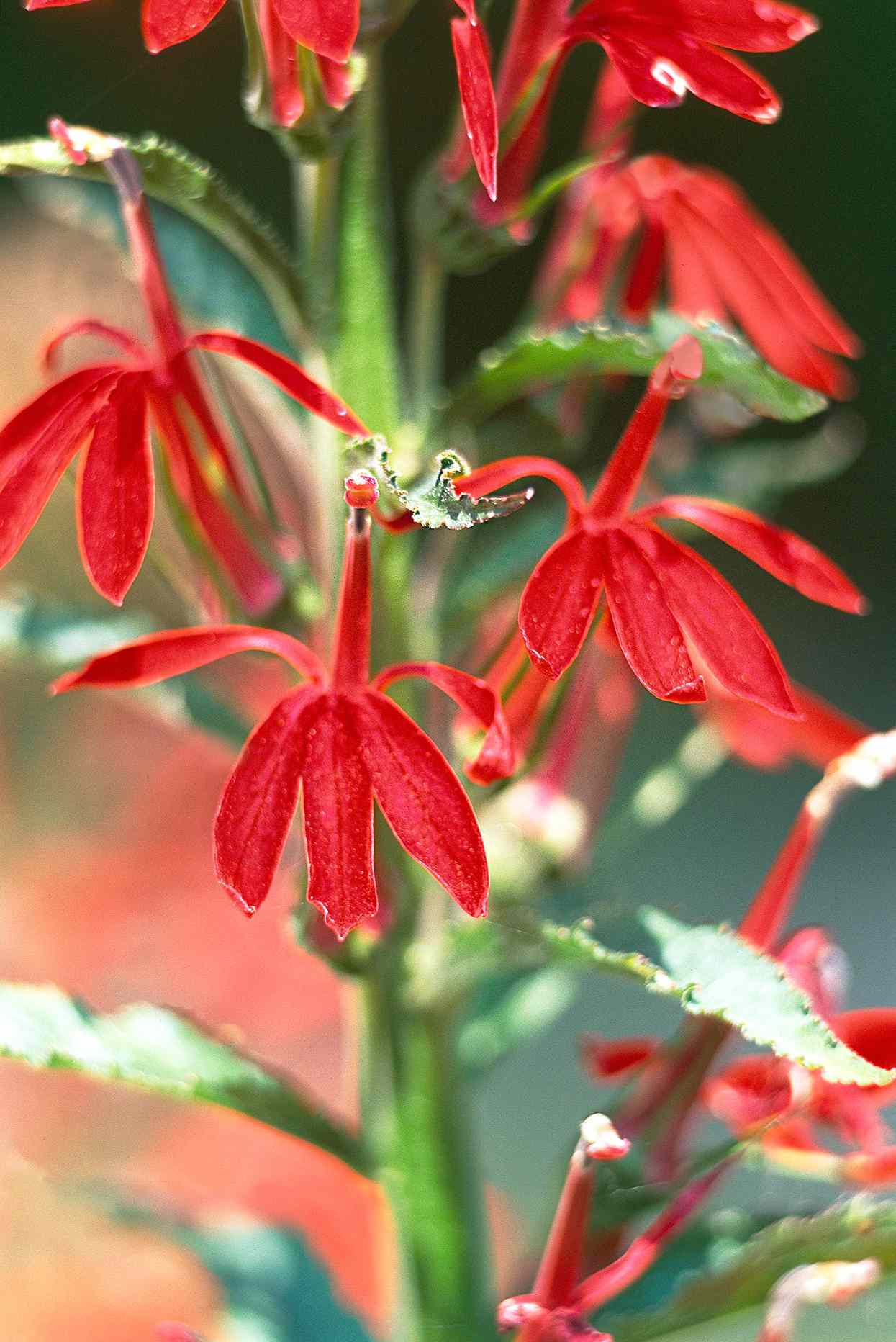
red cardinal flower lobelia cardinalis

RICHARD HIRNEISEN

Perennials for Wet Soils

If your garden bed is down in a ditch or next to the downspout, you’re probably stuck with soggy soil that drowns plants. There are plenty of varieties that can withstand (and even thrive) in that much moisture.

  • Lobelia or Cardinal Flower: Brilliant red or dark pink flowers in late summer to early fall
  • Goatsbeard: Lacy, white flower plumes atop 3- to 5-foot-tall plants from early- to midsummer
  • Joe Pye Weed: Large mauve blooms; up to 6 feet tall in late summer
  • Rodgersia: Course texture; flower plumes in spring or summer
  • Sweet Flag: Long-lasting swordlike foliage
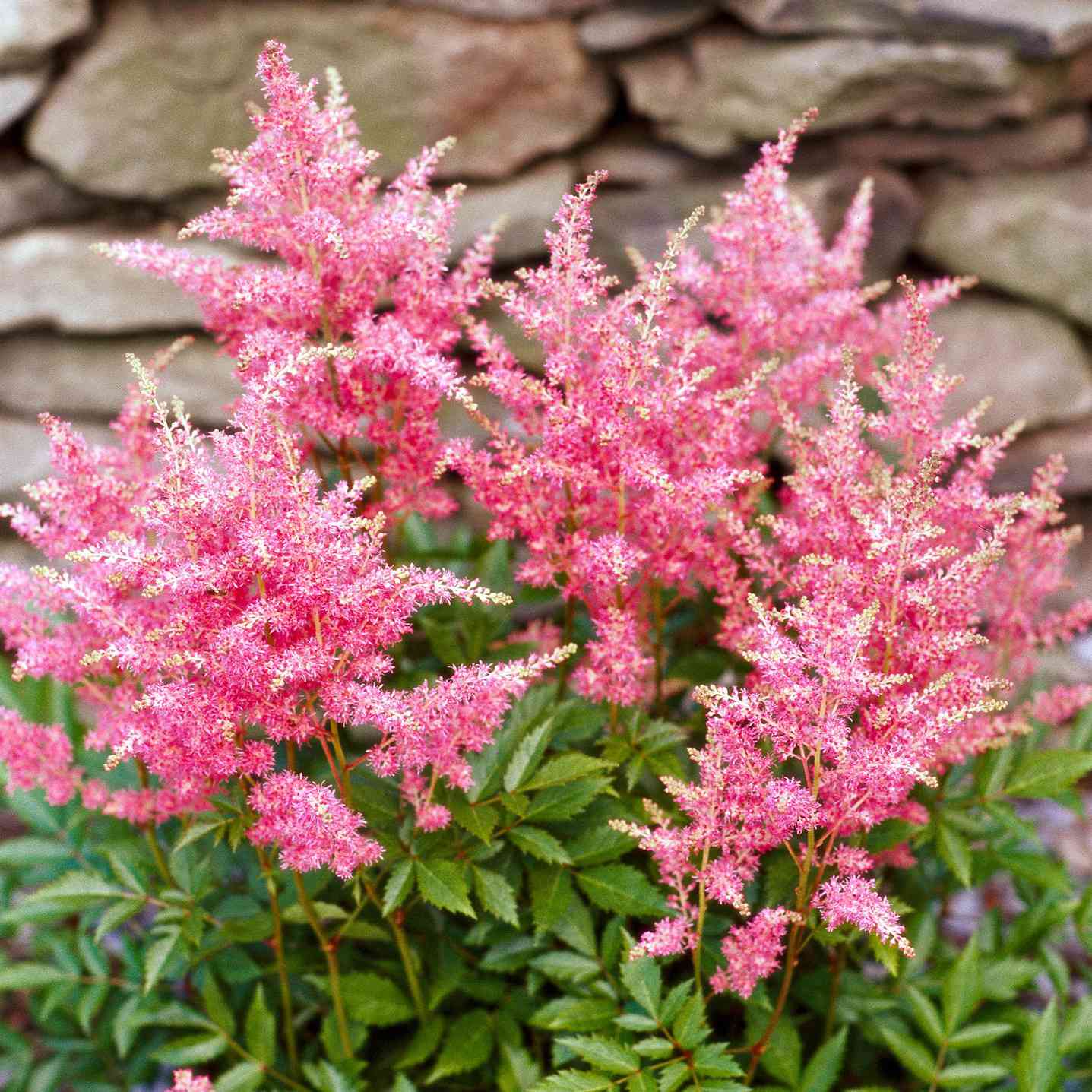
astilbe perennials shade flowers


Perennials for Shade

As much as we love hostas, we know it can be boring to fill in a shady corner of the yard with just one plant variety. Flowers like astilbe, bleeding heart, and phlox can also do well in shade and make excellent planting partners for hardy hosta.

  • Astilbe: Long-lasting flower stalks in summer
  • Barrenwort: Red, pink, white, purple, or bicolor blooms in early- to mid-spring
  • Foamflower: White or light pink flowers in mid-spring
  • Hardy Begonia: Heart-shape foliage; pink flowers in late summer
  • Hosta: Grown for foliage; many cultivars See our favorites here.
  • Hellebore or Lenten Rose: Coarse-textured foliage; blooms in late winter to early spring
  • Lungwort: Early-spring flowers and variegated foliage
  • Old-Fashioned Bleeding Heart: Heart-shape pink flowers in spring
  • Woodland Phlox: Fragrant blue, purple, pink, or white flowers in late spring
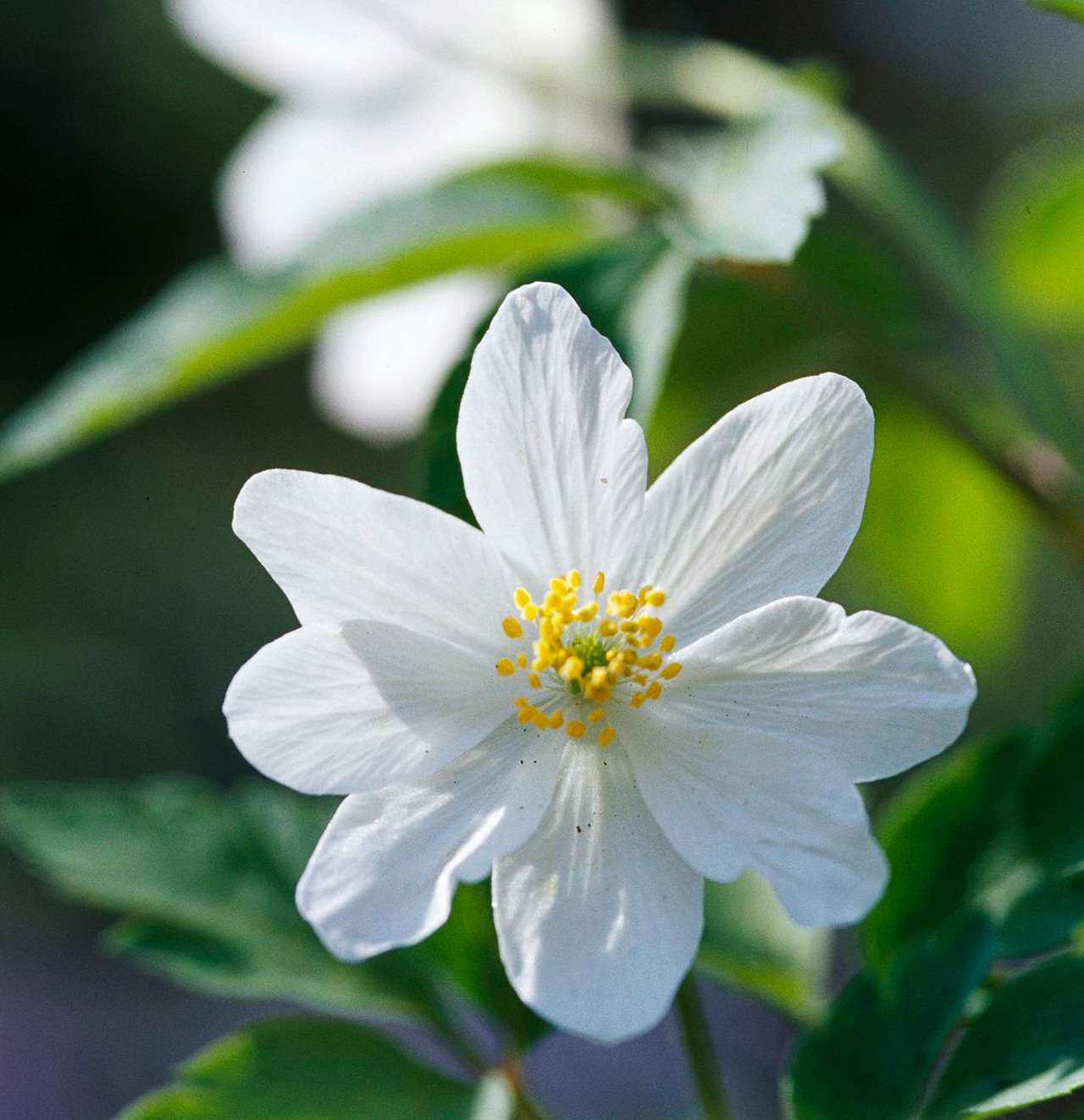
anemone white flowers

Anemone 

ROB CARDILLO PHOTOGRAPHY

Perennials for Alkaline Soils

In certain areas of the country, soil’s acidic balance can be off-kilter, resulting in what we call alkaline soil. Alkaline soil doesn’t let much moisture in and has a weak soil structure that just can’t keep certain plants happy. You can still work with this type of soil without investing in pounds of soil amendments—just look for these plants.

  • Anemone: Late-Summer or fall flowers
  • Coralbells: Many cultivars with colorful foliage
  • Creeping Baby’s Breath: White flowers in summer
  • Geranium: Spring or summer flowers depending on species; foliage of many turns red in fall
  • Pincushion Flower: Blue flowers on wiry stems summer to fall
  • Dianthus or Pinks: White, pink, or red flowers in spring and summer; evergreen foliage in some areas
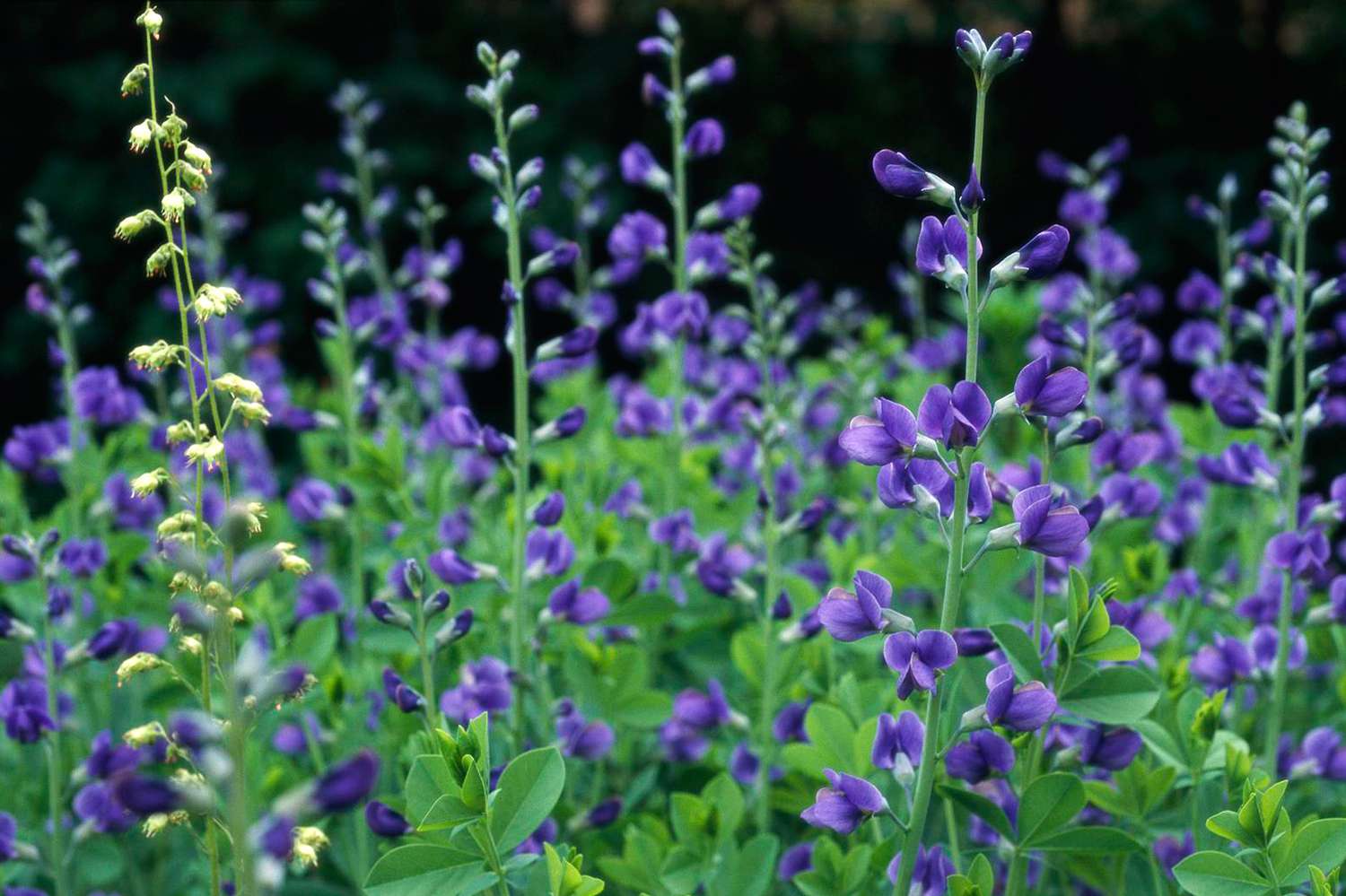
baptisia purple flowers

Baptisia 

SUSAN GILMORE

Perennials for Dry Soils

Typically, dry soils contain a lot of sand, which doesn’t hold moisture very well. You need especially hardy plants that don’t need consistent or large amounts of water. Try some of these.

  • Blue Fescue: Ornamental grass with bluish-green foliage
  • Catmint: Fragrant foliage and lavender-blue flowers in early summer
  • Baptisia or False Indigo: Pealike blue flowers in late spring followed by attractive seedpods
  • Liriope or Lilyturf: Dark green grass-like foliage
  • Penstemon: Desert species have bright flower colors, upright shape
  • Gaura: Airy white or pink flower stalks from midsummer to fall
  • Yucca: Rounded clump of upright foliage
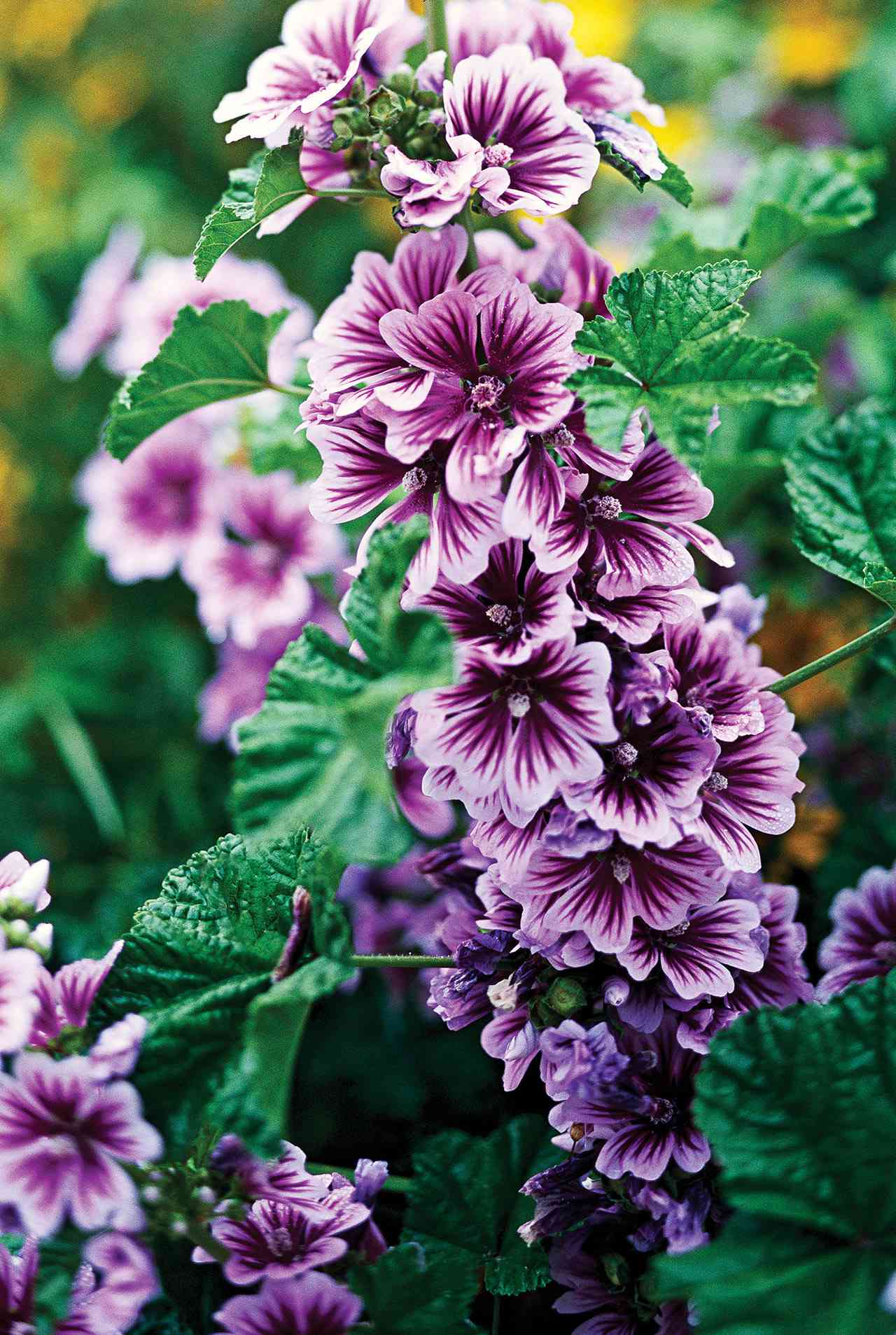
zebrina tree mallow flowers

Mallow 

ED GOHLICH PHOTOGRAPHY INC

Perennials for Full Sun

While all plants need some amount of light to grow and thrive, some are more delicate than others and get scorched if they are placed in full sun. Some plants, however, do super well in hot and sunny spots in the garden.

  • Coreopsis: Yellow flowers all summer
  • Hollyhock: Summer flowers on tall spikes early to midsummer
  • Campion or Maltese Cross: Silver foliage and scarlet flowers in early summer
  • Centaurea or Mountain Bluet: Blue-violet flowers in mid-spring to early summer
  • Poppy: Flowers with paperlike petals in late spring and early summer
  • Peony: Large, fragrant flowers in late spring to early summer See some of our favorite varieties.
  • Mallow: Shrublike with white, pink, or purple-pink flowers all summer


Perennials for Acidic Soils

Just like alkaline soils, acidic soil is a result of a lack of balance of nutrients in the soil. Instead of having too little acidic content, acidic soil has too much, which can be a result of organic matter, excessive rainfall, or too much fertilizer. But, you can still grow gorgeous flowers in acidic soil.

  • Bear’s Breeches: Tall flower spikes in late spring to early summer and texture-rich foliage
  • Cinnamon Fern: Reddish-brown fronds in center of plant
  • Fringed Bleeding Heart: Finely cut foliage; flowers in summer
  • Liatris or Gayfeather: Purple or white flower spikes in early- to midsummer
  • Bergenia: Shiny evergreen foliage with pink blooms in early spring
  • Japanese Iris: Showy flowers in late spring or summer
  • Hellebore or Lenten Rose: Flowers in late summer


Yarrow 

TOM MCWILLIAM

Perennials for Clay Soils

You know if you have clay soil—you come out of landscaping projects with sticky boots and a sore back from shoveling the dense earth. Because it is so dense, clay soil can block plant’s roots from getting water, which chokes them out. Some plants actually do well with these conditions.

  • Daylily: Adaptable grower for tough conditions; many colors available See our favorite varieties.
  • False Sunflower or Heliopsis: Yellow, daisylike flowers native to the prairie
  • Geranium: Many species with pink, purple, or white blooms for sun to part shade
  • Monkshood: Late summer spikes of deep blue for shady sites
  • Obedient Plant: Rapid spreader with pink or white candles of bloom
  • Peony: Fragrant pink, red, white, or yellow late-spring blooms See some of our favorite varieties.
  • Yarrow: Ferny foliage and drought-tolerant; golden-yellow, white, pink, red, or salmon-color blooms


Blanket Flower

 David Speer

Perennials for Sandy Soils

Sandy soil is high in sand content and doesn’t hold nutrients or water well. It’s also more lightweight and finer than other types of soil. If you have sandy soil, you don’t need to be limited to desert plants alone.

  • Artemisia: Silvery foliage is the key feature of this perennial
  • Blanket Flower: Long bloom season of orange-red daisies marked with yellow
  • Baptisia or False Indigo: Shrubby plant with spikes of blue, yellow, white, orange-red blooms in spring
  • Lavender Cotton: Herb with fine texture in silvery gray or green foliage
  • Thyme: Groundcover with pinkish-purple blooms
  • Yarrow: Adapted to full sun and dry soils with wide range of bloom colors
  • Yucca: Succulent with spiky foliage and trusses of white bell-shape blooms


Perennials that are Salt-Tolerant

You may get a high salt content in your soil if you live by a coast, but you can also get areas of salty soil from winter deicing and plowing. If you can’t get the salt levels balanced, lean on these salt-tolerant garden plants.

  • Armeria or Sea Thrift: Compact plant with grassy foliage and pink or white blooms
  • Blanket Flower: Bicolor daisylike blooms on mounded plants
  • Butterfly Weed: Brilliant orange blooms highly attractive to butterflies
  • Candytuft: White blooms in spring on mounded evergreen foliage
  • Daylily: Tough plant for almost any situation except deep shade See some of our favorite varieties.
  • Hens-and-Chicks: Succulent with rosettes of green, pink, or purple foliage
  • Dianthus or Pinks: Carnation relative with grassy blue-green foliage and fragrant pink, white, or red blooms


Perennials that are Deer-Resistant

Deer are beautiful backyard visitors, but nothing is more frustrating than having them eat the flowers and vegetables you’ve worked so hard to grow all season. If you’re methodical about the plants you choose, they’ll leave your garden alone.

  • Astilbe: Shade- and moisture-lover with feathery plumes of blooms
  • Barrenwort: Shade-tolerant groundcover with delicate-looking blooms
  • Lobelia or Cardinal Flower: Moisture-loving plant with spikes of brilliant red or dark pink blooms
  • Foxglove: Clustered spikes of pink bells
  • Hellebore or Lenten Rose: Late-winter bloomer in shades of pink, white, green, or purple
  • Ornamental Allium: Perennial bulb with blooms or purple or white
  • Russian Sage: Silvery-gray foliage and purple blooms in summer


Perennials for Cool Climates

Some plants love the hot and humid air of Southern states, while others do just fine in the more temperate Northern states. You can find colorful flowers in the North that you’ll appreciate having in your garden.

  • Delphinium: Long spikes of blue, purple, pink, or white flowers
  • Globeflower: Yellow springtime blooms with feathery centers
  • Japanese Primrose: Moisture-loving plant with globes of pink, purple, or white blooms in spring
  • Lady’s Mantle: Chartreuse blooms over blue-green foliage
  • Lupine: Upright spikes of pealike blooms in many shades
  • Monkshood: Fall bloomer for shade
  • Poppy: Crepelike blooms in spring in shades of orange, red, pink, or white


Perennials for Hot Climates

Explore the world of tropical plants that love the humidity. The sun won’t burn these hot climate plants—they just can’t get enough of the heat.

  • Blackberry Lily: Orange blooms turn into black seed clusters.
  • Blanket Flower: Adaptable daisy for tough sites.
  • Daylily: Trumpet-shape blooms in a wide range of colors. See some of our favorite varieties.
  • Hardy Begonia: Glossy green foliage with pink blooms.
  • Mexican Sage: Deep purple blooms on silvery plants.
  • Muhly grass: Feathery foliage and white or pinkish blooms.
  • Threadleaf Coreopsis: Finely dissected foliage with small yellow daisylike blooms.

Source: bhg.com©

Improving your Clay Garden Soil

There’s no doubt about it; working in heavy clay soil is a pain in the back. It sticks to your shoes (and tools) and can be more challenging than gardening in sandier soil. However, despite all the hard work, clay soil has its benefits. Namely, it can host life-giving plant nutrients and retain moisture better than other soil types. With some soil amendments, you can turn your sticky clay into the humus-rich, fertile goodness your plants will thank you for.

Amending Clay Soil

There’s a notion that adding sand to heavy clay soil will help lighten it, but that’s a myth. In fact, 99 percent of the time, it turns your ground into cement. Soil treated this way becomes so tough that worms can’t live in it.

Instead, reach for organic matter, such as compost, leaf mold, and well-rotted manure. Organic matter is the best way to amend clay soil: It lightens the soil texture, discourages compaction, adds nutrients, improves drainage and aeration, moderates soil temperature, and provides pore space, essential to plant growth.

Amending your soil takes time and patience but rewards you many times over in the end. The first step should be to add as much organic matter as possible and mix it deeply into your soil. Before you start, have a soil test done. That way, you can incorporate lime, phosphorus, or amendments necessary while tilling in the organic matter. If you’re creating a new bed, this will be much easier.

Start the process by using a tiller to loosen the existing soil (if it is a large area) or a spade (if it is a more manageable size). Next, spread about 2 inches of compost on top of the tilled soil and work that in. Repeat the process two more times. Remember to only work in your clay soil if it is relatively dry. Working or walking on wet clay soil seriously damages the structure you are trying to improve.

Working around existing plants will take more time and caution. Autumn is a great time to do this because the weather is generally drier than in the springtime, and the cooler temperatures are more pleasant to work in. You can even make it an annual part of putting the garden to bed for winter.

Spread a few inches of compost over the ground between the plants and use a narrow spade to turn the compost into the soil. Repeat that at least once more and plan to make that part of your routine. Always work so that you’re walking backward and away from your freshly turned soil.

Over time, regular applications of compost, manure, and other organic matter will improve your soil’s structure, tilth, and overall health.

One last word on gardening in clay soil: Choose plants naturally adapted to growing in clay. It’s always better to work with what you have than to try and change it entirely. Happily, for those of us that garden with heavy clay soil, there is an abundance of beautiful plants to choose from.

Adding sand to your garden soil

If sand is added to garden soil in small amounts, it will make hardly any difference to the overall mixture. Ideally, the soil should have 50% pore space, and in clay soil, the pore spaces are tiny. Sandy soil, on the other hand, has larger pore spaces.

Mixing the sandy soil and clay soil causes the larger spaces of the sand to be compacted and filled in with the minute particles of clay, and the result is dense, heavier soil with a smaller pore space than either of the materials.

For the soil to take on the properties of sand, the ratio of the two materials would need to be close to 50:50. This would be impractical and costly in many cases. Still, it is an excellent way to make your garden soil finer and lighter if you have a small garden space or patch of soil.

Sources: http://www.bhg.com; simplifygardening.com

Mediterranean diet ranked as best diet of the year for 5th time

The Mediterranean diet, based on traditional eating habits in regions of Greece, Italy, and Spain, has been named the best diet overall for the fifth consecutive year by a panel of experts for US News & World Report. 

Rich in plant-based foods, with moderate amounts of lean proteins and healthy fats, the diet also earned top ranking as the easiest diet to follow, best plant-based diet, best for heart health, and best for diabetes.  

The rankings were determined by a panel of specialists in nutrition, heart health, diabetes, and weight loss. The panel analyzed 40 popular diets, ranking them on criteria such as how easy they are to follow, potential for short- and long-term weight loss, and potential to influence certain diseases like diabetes. 

Experts have praised the Mediterranean diet for being nutritionally balanced, easy to maintain over time, and inclusive of a wide range of foods, including red wine. Extensive research suggests it’s linked to a longer, healthier life. It can be time consuming to follow, though. 

The Mediterranean diet is linked to benefits like lower risk of disease and healthy aging

The Mediterranean diet is based around how people eat in countries bordering the Mediterranean Sea, which includes so-called “Blue Zones” where people tend to live the longest, healthiest lives. 

Since the diet incorporates a wide range of traditions and ingredients, it doesn’t focus on specific recipes. Instead, the basic principles include eating plenty of produce like leafy greens, whole grains, legumes, herbs and spices. It’s also rich in healthy fats, like olive oil and nuts, as well as lean protein from sources like fish and poultry. 

The diet is easy to follow and sustain long-term 

One of the biggest draws of the Mediterranean diet is that it includes a huge variety of foods. It doesn’t cut out any foods or restrict calories. As a result, people are unlikely to experience any risks from Mediterranean eating, the flexibility for individuals to follow the diet based on their own preferences and lifestyle makes it easy to maintain long-term. 

If you’re looking for fast weight loss or convenience, Mediterranean eating may not be ideal

No diet is perfect for everyone. Among the few downsides of the Mediterranean diet is that it takes time and knowledge to prepare healthy foods, and ingredients can sometimes be costly, according to the expert reviews.  

Since the diet wasn’t designed for weight loss, it doesn’t mandate how much you should eat or provide specific meals or eating structure, which may make it hard to lose weight quickly, experts said. 

It does encourage moderation with red meat, sugar, and processed foods, which means it can work for weight loss, particularly as part of a healthy lifestyle, research suggests.  

Whether the Mediterranean diet can help you lose weight depends on how it compares to your current diet and your specific meal plan, including portion sizes. 

Article by Gabby Landsverk for Insider©

Image by detoxpri.in

The No. 1 phrase people who are good at small talk always use

Small talk might seem trivial, but it can deliver big results.

It can help us forge new or deeper connections with others by allowing us to discover unexpected areas of common interest. It can enable us to establish or reinforce our personal reputations, giving us an opportunity to demonstrate warmth and empathy.

The power of ‘Tell me more…’

“Tell me more” is a support response; it supports what the other person is saying. The opposite is a “shift” response,” which is a statement that shifts the conversation back to you.

If your friend complains about their annoying upstairs neighbor, you might say, “Yeah, you wouldn’t believe what my neighbor’s been putting me through. His party last night didn’t break up until after 3 a.m.” You’ve just shifted the conversation back to you and your concerns, rather than inviting your small talk partner to contribute even more.

A support response might be to empathize with your friend, or ask for more details about their neighbor’s bad behavior and how they handled it.

In the right context, it is fine to use shift responses — other people want to learn about us, and we don’t want to come across as withdrawn or secretive.

But many people make the mistake of treating other people’s stories as openings for them to talk about themselves. But if you do that often, you miss an opportunity to learn more.

After a conversation partner contributes a thought or anecdote, we can say something like, “What excited you about that?” or “Wow, what happened next?” or “How did you feel when that happened?

Comments like these give your partner permission to expand on what they said or provide deeper insight.

The more you support what someone else is saying, rather than shifting the focus to your experience, the easier and more enjoyable small talk becomes.

Article by Matt Abrahams for CNBC© Photo credit: CNBC©

Subtle Signs You’re Eating Too Much Sugar

You’ve finally kicked the ice-cream-after-dinner habit. There’s no way you’re eating too much sugar. Right? Eliminating obvious sugar bombs like candy and cake is a huge step toward a healthier diet. However, there are lots of other places sugar hides. That includes everything from high fructose corn syrup found in some salad dressings to fruit juice added to “all natural” protein bars.

Sugar is a carbohydrate in its simplest form, which your body breaks down into glucose—your body’s preferred form of energy. Simple sugar alone moves to your bloodstream quickly.  The result causes your body to spike the production of insulin to transfer glucose into your cells.

The Risks of Too Much Sugar

Some preliminary research has suggested that a high-sugar diet raises your blood sugar, increasing free radicals that boost inflammation. Over time, too much sugar ups your risk of obesity and increasing your risk of diabetes.   In addition, may increase your risk of conditions like certain cancers and chronic illnesses like heart disease.

Also:

You’re Breaking Out Around Your Mouth and Chin

You’re Super Moody

You Can’t Get a Good Night’s Rest

Your Skin Is Prematurely Wrinkled

You Keep Getting Cavities

You Crave Dessert After Every Dinner

You’re Constantly Hungry

You Have Joint Pain

It’s Impossible to Lose Weight

Your Brain Feels Foggy

Fruit Just Isn’t Sweet Enough

You’re Constantly Bloated

You Don’t Feel as Strong

Your Blood Pressure Rises Slightly

You’ve Lost Motivation to Work Out—Ever


How Much Sugar Should You Eat Per Day?

The FDA says that no more than 10 percent of your daily calories should come from added sugars.   For a woman, that adds up to 38 grams (10 teaspoons) for a 1,500-calorie diet.  For men, 51 grams (13 teaspoons) on a 2,000-calorie diet.

Processed foods, in particular, can get sneaky: Even though apple juice might be made from a natural sugar, it can still saddle a food with way too much overall sugar. An açai bowl or smoothie, for example, can overdo it with a too much fruit—which essentially becomes added sugar. Just because a label says, ‘no added sugar,’ you still want to read the label and see how many grams of sugar there are in that item per serving.

When it comes to the natural sugars found in a whole sweet potato or an apple, most of us don’t come even close to overdoing it.  Experts aren’t worried about the sugar content because you’re getting so many other benefits, like vitamins and fiber to slow down and how your body absorbs and uses sugar. As a general guideline, limit yourself to about two cups of whole fruit a day.

It’s simply not realistic to avoid all added sugars in your diet. However, it’s a good idea to read labels, focus on whole, unprocessed foods as much as possible, and make healthier food choices.

Source: everydayhealth.com

Photo credit:  Yaroslav Danylchenko/Stocksy

Related:  How to Stop Eating So Much Sugar – TUTORING YOU

40 Most Common Verbs in English


According to the Oxford English Dictionary, there are over 250,000 words in the English language. But don’t worry—you don’t need to learn them all! Focusing on frequently used verbs is the best way to improve your speaking, writing, and comprehension skills. These verbs are used daily in conversations, making them crucial for communication.


Each verb has five forms. See how different forms make different tenses.


Source: English Banana.com©

memecreator.org

Related:

Advanced English Words – TUTORING YOU

8 of the Best Plants to Take Cuttings from Right Now

For healthier plants and even more blooms

Taking cuttings is a good way to keep your plants going from year to year. It’s so easy to do and if you become good at it is a great way of adding more of your favorite plants to fill out your collection. The good news is lots of beautiful flowers like fuchsias, pelargoniums and hydrangeas are all easy wins when it comes to taking cuttings successfully. 

 We’ve chosen eight of the best plants to take cuttings from right now. As soon as you’ve snipped your cuttings, put them in a polythene bag to conserve moisture and stop them drying out too fast. Then get your cuttings potted as soon as you can by following our easy guide on what to do next.

1. FUCHSIA

2. SALVIA

3. BUTTERFLY BUSH (BUDDLEIA)

4. PELARGONIUM (GERANIUM)

5. HYDRANGEA

6. BEARDTONGUE (PENSTEMON)

7. VERBENA

8. JAPANESE ANEMONE

DO I NEED TO USE ROOTING HORMONE?

Rooting powders contain synthetic hormones that mimic the natural hormones found in plants. This can boost growth and speed up the development of your cutting. They also include chemicals that lessen the risk of your cuttings becoming diseased, which should increase your success rate.

Many gardeners think rooting powders are unnecessary, but it can be a good thing to use if you’re taking cuttings of more difficult plants. Fill a container with water and put some rooting hormone into a second container. Dip the end of the cutting into the water then into the rooting hormone and tap off any excess powder before planting your cutting.

Now is a good time to take cuttings too. In late summer and early fall hormone levels in plants are high so the cuttings will root and grow well. You’re out in the yard anyway on a tidying mission, so it’s perfect timing to start snipping from plants that do well for you, and that you would like more of to fill out your flower bed ideas next year.

Source: By Sarah Wilson for homesandgardens©

Massive emergency alert test scheduled to hit your phone on Wednesday. Here’s what to know.

Get ready to not freak out. On Wednesday, Oct. 4 at 2:20 p.m. EDT, every TV, radio and cellphone in the United States should blare out the distinctive, jarring electronic warning tone of an emergency alert.

blogspot.com

It’s a test – only a test.

Officially, the trial is called the Nationwide Emergency Alert Test. You know it’s a test and not an actual emergency because it’s accompanied by an explanation of the test.

No, it’s not a national conspiracy to infect people with nanoparticles. Yes, it does go back all the way to the Cold War in the 1950s. No, we can’t play you the tone – we could get hit with a big fine if we did.

But mostly the test is an important way to make sure that if something really bad – and really big – happens, Americans can be warned quickly.

Here’s what to know about the test:

The message will be heard and seen pretty much everywhere. It’s being conducted with the participation of radio and television broadcasters, cable systems, satellite radio companies and cellphones networks.

What will the emergency alert test message say?

All across the United States, broadcast TV shows and radio will be interrupted as the emergency message goes out. That message will say:

“This is a nationwide test of the Emergency Alert System, issued by the Federal Emergency Management Agency, covering the United States from 14:20 to 14:50 hours ET. This is only a test. No action is required by the public.”

Cellphones will get the warning as a tone, a vibration and as a text message:

“THIS IS A TEST of the National Wireless Emergency Alert System. No action is needed.”

Phones on which the main menu set to Spanish will see this: “ESTA ES UNA PRUEBA del Sistema Nacional de Alerta de Emergencia. No se necesita acción.”

When will the emergency alert test happen?

The alert will air at the same moment across every time zone in the country starting at 2:20 p.m. EDT on Wednesday, Oct. 4.  The time will vary across time zones, so look to see when you might be alerted. 

  • 2:20 p.m. EDT
  • 1:20 p.m. CDT
  • 12:20 p.m. MDT
  • 11:20 a.m. PDT
  • 10:20 a.m. ADT
  • 8:20 a.m. HST

The test is scheduled to last approximately one minute. It will only go out once, there will be no repeats.

Will you get the message if your phone is turned off?

Only cellphones that are turned on will receive the message. If your phone is on but the sound and vibration features are turned off, you’ll still get the message.

If your phone is set to Wi-Fi or airplane mode, it won’t receive the alert because the message goes out over the cellular broadcast system.

How loud will the alert be?

The type of noise and general volume of the alert is similar to that of an Amber Alert or warnings issued by the National Weather Service in case of severe weather. 

The WEA alert, which will be sent out to all cellular devices will be accompanied by a unique tone and vibration to make sure that the alerts will be available to the public, including people with disabilities, according to FEMA.

Why do we need a national emergency warning test?

Federal emergency management coordinators need to make sure the national alert system is still an effective way to warn Americans about emergencies, natural catastrophes, attacks and accidents at the national level.

This article originally appeared on USA TODAY: Massive emergency alert test scheduled to hit your phone on Wednesday. Here’s what to know.

How to Plant a Dog-Friendly Garden

You can have the attractive backyard of your dreams—one that you and your dogs can enjoy together. Dog-friendly gardens allow dogs to be dogs while their owners can enjoy healthy green lawns, colorful flowers, and thriving fruit and vegetable gardens. Pet-friendly landscaping uses an organic approach to gardening that’s safer and healthier for our families and dog friends.

Dogs are known for lying down in your favorite flower bed.

Dog-Friendly Plants

Planting dog-friendly plants is an essential component of creating your dog-friendly garden. Dog-friendly plants are hardy and non-toxic yet beautiful. They stand up to your dog’s daily rigors and bounce back from abuse. Many woody shrubs tolerate aggressive pruning and stand up to most canine activities. The majority of these species don’t mind the soil compaction created by heavy paw traffic and generally coexist well with dogs and children.

Here are five recommended shrubs for dog-friendly gardens:

  1. Red-Twig Dogwood
  2. Smoke Tree
  3. Forsythia
  4. Spiraea
  5. Lilac

Another must in a dog-friendly garden is a tough ground cover. These low-growing powerhouses tolerate stepping, rolling, and turning while providing color and texture to a garden setting.

Here are five recommended ground covers for a dog-friendly backyard:

  1. Elfin Thyme
  2. Irish Moss
  3. Miniature Stonecrop
  4. Labrador Violet
  5. Snow in Summer

Landscaping Essentials

There are certain key elements to consider when planning a dog-friendly yard. Observe your dog’s behavior and personality traits. Where does your dog like to patrol? Go potty? Lounge? Dig? Run and play? Incorporate all of these into your dog-friendly landscape design.

A bored dog can exhibit nuisance barking or digging and chewing in inappropriate areas. Make sure your pup gets plenty of exercise—a tired, happy dog is a well-behaved dog. For a more enjoyable outdoor lifestyle for you and your best friend, invest a little time in behavior modification. Your pet needs a dedicated owner willing to show him the way.

Here are four elements to consider when creating a dog-friendly yard:

  1. Designated Potty Area: To limit the aesthetic impact on your lawn, encourage your pet to eliminate in the same area each time. For boy dogs, some plants and shrubs are more forgiving, such as flowering woody shrubs like spirea, viburnum, shrub roses, and weigela. Watering down the area also helps eliminate brown spots.
  2. Exercise Area: Most canines love to run and frolic. For a champion sprinter or frisbee catcher, make sure to include an open area of turf to indulge your pup’s need for play.
  3. Shade: A spot to keep cool is a must for dogs that enjoy time in the garden. Your furry friend needs a place to escape from the hot sun, so a shady area is a vital element of a dog-friendly landscape. Perfect spot to take a nap!
  4. Water: Dogs need fresh water to keep hydrated and cool off. It’s very important to provide a source of cool, fresh water they can drink when the need arises.

Source: How to Plant a Dog-Friendly Garden – Dengarden