You Need to Clean These Body Parts at the End of Every Day


Cleanliness is next to godliness, or so the expression goes. But how diligent are we really about our self-maintenance? If we’re going by a report in The New York Times, countless Americans have thrown in the towel on bathing regularly over the course of the last year. Now, that probably doesn’t seem like a huge deal—and an argument could be made that showering a bit less may actually be better for your health—but it’s simply a fact that there are some parts of your body you really must clean every day, and specifically at the end of every day.

“Showering in the evening is better for your skin health for a number of reasons,” as cosmetic doctor Rekha Tailor, MD, recently explained Express. “In doing this, it removes the dirt from the air which includes germs, pollution and dust which can gather during the day, as well as sweat which accumulates. By showering at night, you are cleansing your skin of these before you go to sleep, thus enabling it to properly regenerate overnight.”

Got it? Excellent. Now read on for the parts of your body you should be scrubbing every day.

 1. Your Feet

According to Tom Biernacki, PDM, a podiatrist and board-certified foot and ankle surgeon, “foot odor and foot fungus can only survive if there is dead skin or sweaty skin on your feet.” Do you know how to get rid of those things? Give them a good wash!

Now, you’re doing this for reasons beyond simply not smelling. If left untended, foot and toenail fungus is likely to lead to athlete’s foot or infect your nails, which may require surgery to remove them if they get seriously infected.

Be sure to really scrub your feet and don’t just expose them to a little hot water.  “We may miss out the part between our toes and under the nails and fungus can form, resulting in fungal infections,” says Chris Airey, MD, the medical director at Optimale as well as a practicing physician with the NHS. “It’s also important to keep the heel and pads of the toes moisturized or painful cracks may form.”

 2. Behind Your Ears

Airey explains that not cleaning behind your ears regularly can result in “infections or seborrheic dermatitis, or even just a bad smell.” You’d think this would get noticed before it became a problem, but many people tend to neglect this out-of-sight area.

“Behind your ears you have skin folds in addition to a high amount of sebaceous glands,” explains Sandra El Hajj, MD, a naturopathic medical doctor specializing in preventive health. “These glands can collect sweat while secreting sebum. This accumulation may lead to the accumulation of bacteria that may create a cheese-like smell. All these secretions are normal; however, it is your responsibility to keep that area cleansed on a daily basis.”

3. Your Tongue

“Clean your tongue everyday when you brush,” urges William L. Balanoff, science consultant for Abova Health, executive clinical director of Orthodontic Care of Georgia and the CEO of Oral Care Perfected. “Everyone knows to brush and floss their teeth everyday but most patients never clean or scrape their tongue.”

Balanoff adds that your tongue is a source of bad breath and can also be a breeding ground for bacteria. A buildup of this bacteria can result in gingivitis, discoloration, or even duller taste buds. “Most toothbrushes have a tongue cleaner on the backside of the brush,” says Balanoff. “Use it regularly to avoid bad breath and promote a cleaner, healthier mouth.”

4. Under Your Arms

Like your feet, you can tell pretty quickly when your armpits are in need of a wash. But it’s also an area where the skin is sensitive and more prone to ingrown hairs and potential infection. Waqas Ahmad Buttar, MD, a family physician at Sachet Infusions, points out that armpits are among the areas of the body “where most of the pathogens attack due to increased sweating. There is also the growth of hair in the groin and armpits, which, when combined with sweating in hot, humid weather, may cause infections.”

While deodorant may help control issue around unwanted smells, to really ensure your body is healthy and free from damaging bacteria, it’s best to reach for the bar of soap. 

Article by Alex Daniel for EatThis,NotThat©

Photo © Provided by Eat This, Not That!

Eating Habits to Avoid if You Don’t Want Liver Damage


More than 4.5 million Americans have been diagnosed with chronic liver disease, and the condition is associated with over 44,000 deaths in the U.S. each year. In many cases, your eating and drinking habits could be causing liver damage over time. If you want to keep this vital organ healthy and avoid serious illness, read on to discover which of your eating habits could be contributing to liver damage. 

1. Eating sugary foods

If dessert’s part of your daily routine, you may find your liver health flagging over time. Among the biggest risk factors for Non-Alcoholic Fatty Liver Disease (NAFLD) is a “high intake of simple sugars,” says IdealFit partner dietitian nutritionist Andrea Grange, RD. “Simple carbohydrates, especially fructose, have been linked to NAFLD,” she explains.

The United States dietary guidelines call on adults to limit added sugar to 10 grams or less per meal. Desserts, sodas, fast food, and frozen meals are notoriously high in sugar, but others are less obvious. Some common foods like fruit juice and cereal may contribute more sugar to your diet than you might expect.

2. Drinking soda

It’s not just poor eating habits that cause problems, but also, what we consume as beverages.  Drinking soda isn’t just bad for your waistline—it can cause serious damage to your liver, too.

“Soft drinks and sodas often contain high levels of the sweetener high fructose corn syrup. Unlike glucose which can be used for energy, fructose has to first be processed by the liver before it can be used by the body,” explains Kylie Ivanir, MS, RD, founder of Within Nutrition.

“When excess fructose reaches the liver, it is used to create fat. Over time, this can result in too much fat being stored in the liver cells, which can result in liver inflammation and damage,” Ivanir explains.

Excessive belly fat is tied to an increased risk of type 2 diabetes and heart disease. In one 10-week study, 32 healthy people consumed beverages sweetened with either fructose or glucose.

Those who consumed glucose had an increase in skin fat — which is not linked to metabolic disease — while those who consumed fructose saw their belly fat significantly increase.

3. Eating a high-fat diet

That high-fat meal plan you’ve been adhering to may help you shed a few pounds, but that weight loss may be coming at the expense of your liver health.

“Low-carb, high-fat diets can be damaging to the liver, among other organs required to filter and process nutrients,” says Trista Best, MS, RD, a registered dietitian at Balance One Supplements.

“High-fat diets can create a type of overload where excess fat may be deposited into the liver rather than filtered out.” Over time, Best says, this may lead to the development of NAFLD.

4. Cooking with vegetable oil

Vegetable oil may sound healthy, but it can be a major contributor to poor liver health over time.

Vegetable oil does have a high smoke point, which means that you can use it to cook at high temperatures.  The smoke point is the temperature at which the oil starts to burn and degenerate to produce dangerous compounds. Vegetable oil’s smoke point will vary depending on which oils are used in the blend. Usually, it will be somewhere between 400 and 450 degrees Fahrenheit (232.22 °C). The oil blend that you will see labeled as vegetable oil in your grocery store will have a high smoke point, but not as high as that of avocado oil, which is over 500 degrees.

“Refined vegetable oils high in omega-6 fatty acids and cooking with fats beyond the smoking point” can cause chronic inflammation that potentially leads to NAFLD, says Tina Marinaccio, MS, RD, CPT, an integrative culinary registered dietitian nutritionist with Health Dynamics LLC.

5. Drinking alcohol

Drinking alcohol can cause serious liver health issues over time—and it doesn’t take much to cause damage. 

  • Your liver can only process small amounts of alcohol.
    • The rest of the alcohol can harm your liver and other organs as it moves through the body.

“Excess alcohol over time leads to excessive liver inflammation, which can lead to permanent scarring,” says Taylor Graber, MD, owner of ASAP IVs.

“As this scarring becomes worse, liver function becomes impaired as the condition approaches cirrhosis and ultimately liver failure.”

However, the threshold for “excess” consumption may be lower than you expect. “Drinking more than 1-2 alcoholic beverages per day will lead to accumulation of a toxic by-product called acetaldehyde. This is very damaging to your liver cells and over time can lead to cirrhosis,” says Sanjiv Lakhia, DO, a physician with Lakhia Integrative Health.

Keep in mind that a beverage that you drink might have more than one standard drink of alcohol in it.

Excessive alcohol use can lead to:

  • High blood pressure.
  • Heart disease.
  • Liver disease.
  • Stroke.
  • Alcohol use disorder—this affects both physical and mental health.
  • Digestive problems.
  • Weaker immune system—increasing your chances of getting sick


Article by Sarah Crow. Photo credit: EatThis,NotThat.com


A popular diet linked to lower blood pressure — and reduced cardiac injury and strain

Does the DASH diet have hidden health effects?

© Getty Images

Researchers from Beth Israel Deaconess Medical Center examined three cardiovascular indicators to determine if — and how — diet directly impacts cardiac health. They analyzed blood samples from clinical-trial participants who stuck to strict dietary regimens and found that the DASH diet, already shown to lower blood pressure, also reduces inflammation.

The conclusion, published in the Journal of the American College of Cardiology, also found that the DASH diet — whether or not it’s adhered to in conjunction with a low-sodium diet — reduces heart injury and strain. The researchers analyzed stored specimens from 412 participants conducted at four medical centers in the U.S. between 1997 and 1999.

The DASH diet, short for Dietary Approaches to Stop Hypertension, recommends fruits, vegetables, nuts, whole grains, poultry, fish and low-fat dairy products, while restricting salt, red meat, sweets and sugar-sweetened beverages.

Among trial participants on the DASH diet, biomarkers linked to cardiac damage and inflammation fell by 18% and 13%, respectively. Participants combining the DASH diet with reduced-sodium behavior had the most pronounced reductions in both cardiac injury and stress — 20% and 23%, respectively — although inflammation was not significantly impacted.

“Our study represents some of the strongest evidence that diet directly impacts cardiac damage, and our findings show that dietary interventions can improve cardiovascular risk factors in a relatively short time period,” said Stephen Juraschek, an assistant professor of medicine at Beth Israel Deaconess Medical Center and Harvard Medical School.

“The data reinforce the importance of a lifestyle that includes a reduced-sodium, DASH diet rich in fruits, vegetables and whole grains to minimize cardiac damage over time,” said Juraschek, a co-author on the study.

U.S. News and World Report named the DASH diet the No. 2 diet for 2021 in a tie with the Flexitarian diet, with the Mediterranean diet taking first place.

The Mediterranean diet focuses on olive oil rich in healthy omega-3 fatty acids, fruits and vegetables, whole grains and lean protein like fish and chicken, with the occasional piece of red meat. It also emphasizes beans, nuts, legumes, and flavorful herbs and spices, as well as cheese, yogurt and a glass of red wine in moderation.

Unlike the Mediterranean diet, the DASH diet emphasizes fruits, vegetables, low-fat dairy products and nuts while limiting saturated fats, total fat, cholesterol, red meat, sweets and sugar-containing beverages, Juraschek and his co-authors said. It was developed in the 1990s with the specific goal of lowering blood pressure, and has been shown to help lower the chances of stroke and diabetes.

Blood pressure is one of the best predictors of cardiovascular health, and cardiovascular disease is the No. 1 killer of people in the U.S. Previous research also suggested that a lack of sleep may offer one possible explanation for why sleep problems have been shown to increase the risk of heart attack, stroke and even death from cardiovascular disease.

Article by Quentin Fottrell for Market Watch©

Source: A new study links this popular diet with lower blood pressure — and reduced cardiac injury and strain (msn.com)

Plants You Should Always Grow Side-By-Side

by The Editors of delish

Seasoned gardeners know that a diverse mix of plants makes for a healthy and beautiful garden. Many believe that certain plant combinations have extraordinary (even mysterious) powers to help each other grow. Scientific study of the process, called companion planting, has confirmed that some combinations have real benefits unique to those pairings.

© Willowpix – Getty Images Companion planting uses one species’ advantages to help another. Check out these 13 power pairs!

Companions help each other grow and use garden space efficiently. Tall plants, for example, provide shade for sun-sensitive shorter plants. Vines can cover the ground while tall stalks grow skywards, allowing two plants to occupy the same patch. Some couplings also prevent pest problems. Plants can repel harmful organisms or lure the bad bugs away from more delicate species.

These combinations of plants do way better, together:

Roses and Garlic

Gardeners have been planting garlic with roses for eons since the bulbs can help to repel rose pests. Garlic chives are probably just as repellent, and their small purple or white flowers in late spring look great with rose flowers and foliage.

Marigolds and Melons

Certain marigold varieties control nematodes in the roots of melon without using chemical treatments.

Tomatoes and Cabbage

Tomatoes repel diamondback moth larvae, which can chew large holes in cabbage leaves.

Cucumbers and Nasturtiums

The nasturtium’s vining stems make them a great companion rambling among your growing cucumbers and squash plants, suggests Sally Jean Cunningham, master gardener and author of Great Garden Companions. Nasturtiums reputedly repel cucumber beetles, but they can also serve as a habitat for predatory insects like spiders and ground beetles.

Peppers and Pigweed

Leafminers preferred both pigweed (also called amaranthus) and ragweed to pepper plants in a study at the Coastal Plains Experiment Station in Tifton, Georgia. Just be careful to remove the flowers before the weeds set seed.

Cabbage and Dill

“Dill is a great companion for cabbage family plants, such as broccoli and brussels sprouts,” Cunningham says. The cabbages support the floppy dill, while the dill attracts the helpful wasps that control cabbage worms and other pests.

Corn and Beans

The beans attract beneficial insects that prey on corn pests such as leafhoppers, fall armyworms, and leaf beetles. The vines can also climb up the corn stalks.

Lettuce and Tall Flowers

Nicotiana (flowering tobacco) and cleome (spider flower) give lettuce the light shade it grows best in.

Radishes and Spinach

Planting radishes among your spinach will draw leafminers away from the healthy greens. The damage the leafminers do to radish leaves doesn’t prevent the radishes from growing nicely underground.

Potatoes and Sweet Alyssum

The sweet alyssum has tiny flowers that attract delicate beneficial insects, such as predatory wasps. Plant sweet alyssum alongside bushy crops like potatoes, or let it spread to form a living ground cover under arching plants like broccoli. Bonus: The alyssum’s sweet fragrance will scent your garden all summer long.

Cauliflower and Dwarf Zinnias

The nectar from the dwarf zinnias lures ladybugs and other predators that help protect cauliflower.

Collards and Catnip

Studies have found that planting catnip alongside collards reduces flea-beetle damage on the collards. The fragrant plant may also help repel mosquitoes.

Strawberries and Love-In-A-Mist

Tall, blue-flowered love-in-a-mist (Nigella damascena) “looks wonderful planted in the center of a wide row of strawberries,” Cunningham says.

Source: Plants You Should Always Grow Side-By-Side (msn.com)

Never Clean Your Kitchen Counters With This

© Provided by Best Life

Whether you’re cooking, eating, or serving, a lot of mess can go down in the kitchen. And when it’s time to sweep away crumbs or wipe up spills on your counter, you probably grab whatever is closest to clean up the mess without thinking twice. Unfortunately, that could be causing serious problems. In fact, experts say that there’s one common item you should never clean your kitchen counters with, as it may spread dangerous bacteria around the room. Read on to find out how you could be doing more harm than good when cleaning up your kitchen.

You should never clean your kitchen counters with used dish towels.

When it comes to cleaning your kitchen countertops, avoid reaching for your trusty dish towel to do so. According to Towel Supercenter, dish towels can easily be exposed to dangerous bacteria, so using them for different purposes—like cleaning your kitchen counters—can just spread that bacteria around. While reusable dish towels may seem convenient, you might want to go with a different option for your safety.

“In some scenarios, it may be safest to reach for a disposable paper towel,” the experts at Towel Supercenter explain on their website. “Tossing the paper towel after cleaning the mess helps decrease your chances of spreading bacteria, especially if you don’t throw your reusable towel into the kitchen wash right away.”

Spreading bacteria in the kitchen can give you food poisoning.

Researchers from the University of Mauritius released a study in 2018 describing the health dangers of dish towels. After culturing bacteria from 100 dish towels used for a month, they found that 49 percent of them collected bacterial growth such as E.coliEnterococcus species, and Staphylococcus aureus. And towels used for more than one purpose—like wiping utensils and cleaning countertops—had a higher bacterial count than towels that were only used for one activity. “Those are bacteria that are concerns for foodborne illnesses,” Paul Dawson, PhD, a food scientist and professor in the College of Agriculture, Forestry and Life Sciences at Clemson University, explained to CNN.

Common symptoms of food poisoning include upset stomach, stomach cramps, nausea, vomiting, diarrhea, and fever, and can be anywhere from mild to very serious, according to the Centers for Disease Control and Prevention (CDC). If you experience bloody diarrhea, high fever, frequent vomiting, signs of dehydration, or diarrhea that lasts more than three days, you should see a doctor immediately, as food poisoning can result in long-term health problems or even death, per the CDC.

More than half of people admit to cleaning their countertops with dish towels.

A March 2021 Bounty survey of cleaning behaviors among 2,000 people in the U.S. found that 58 percent of respondents use dish towels to clean up messes or spills on their kitchen counters. And despite 18 percent of respondents saying they are aware that kitchen dish towels are one of the dirtiest items in the house, 41 percent still said they will reuse a dish towel more than five times before washing it.

“Used dishcloths can provide a flourishing environment for bacteria,” Jessica Rivera, MS, an infectious disease expert, said in statement accompanying the survey. “And what many do not realize is, when you wipe up a mess or dry your hands with a used, reusable cloth, you may be helping to spread bacteria.”

You should be changing and washing your dish towels frequently.

Only 11 percent of people in the U.S. say they replace or clean their kitchen hand towel more than once a week, according to the survey. But the U.S. Department of Agriculture (USDA) acknowledges that kitchen dish cloths are “potential sources of bacteria,” which means they should be changed and washed more frequently than that.

Of course, how frequently each household should be washing their dish towels depends on a few different factors, per the Institute of Agriculture and Natural Resources at the University of Nebraska, Lincoln. This includes how often they are used and what they’re used for in the kitchen. If your towel is used to clean up anything that can contribute to bacteria growth, like raw meat, poultry, or seafood juices, it should be washed and replaced with a new one immediately. The USDA recommends that you wash dish towels in the hot cycle of your washing machine.

Source: Never Clean Your Kitchen Counters with This, Experts Warn (msn.com)

Guide to Perennial Flowers by Season

You can have a succession of color from spring to fall by choosing plants with bloom times that overlap with each other. Use these suggestions for sun and shade by season to get started.

Perennials are a must-have in your garden because of their ability to come back year after year, usually growing even stronger and more beautiful with age. But unlike annuals that can bloom non-stop for months, most perennials have a relatively short bloom season, lasting from just a few days to a few weeks. You can still ensure plenty of flowers from your perennials through the seasons by choosing varieties with staggered bloom times. And don’t be afraid to pack in the plants for the best color show: Where three or four types of annuals can brighten a bed all season long, you might need a dozen different perennials to make sure something is blooming from spring to fall. Start planning your continuously blooming garden by selecting a combination of these spring, summer, and fall-blooming perennials for sun and shade.

Spring Seasonal Perennials for Shade

These spring flowers will brighten any shady area. Planted in low light, these seasonal perennials are low-maintenance and low-risk in attracting pests. You can count on these early bloomers to kickstart your garden every spring.

  • Barrenwort (Epimedium)
  • Bleeding heart (Dicentra)
  • Columbine (Aquilegia)
  • Primrose (Primula)
  • Foamflower (Tiarella)
  • Bergenia
  • Heart-leaf brunnera (Brunnera)
  • Hellebore (Helleborus)
  • Jacob’s ladder (Polemonium)
  • Lungwort (Pulmonaria)
  • Viola
  • Solomon’s seal (Polygonatum)
Iberis sempervirens, candytuft

Candytuft produces masses of snowy white blooms. | Photo credit: Denny Schrock

Spring Seasonal Perennials for Sun

Need a little something more to liven up your sunny space? These sun-loving perennials spring back year after year with dozens of blooms and beautiful color. Equipped for growing in the hot sun, many of these pretty perennials are also tough and drought tolerant.

  • Alpine clematis (Clematis alpina)
  • Candytuft (Iberis)
  • Creeping phlox (Phlox subulata)
  • ‘Crater Lake Blue’ Veronica
  • Dianthus
  • Sea thrift (Ameria)
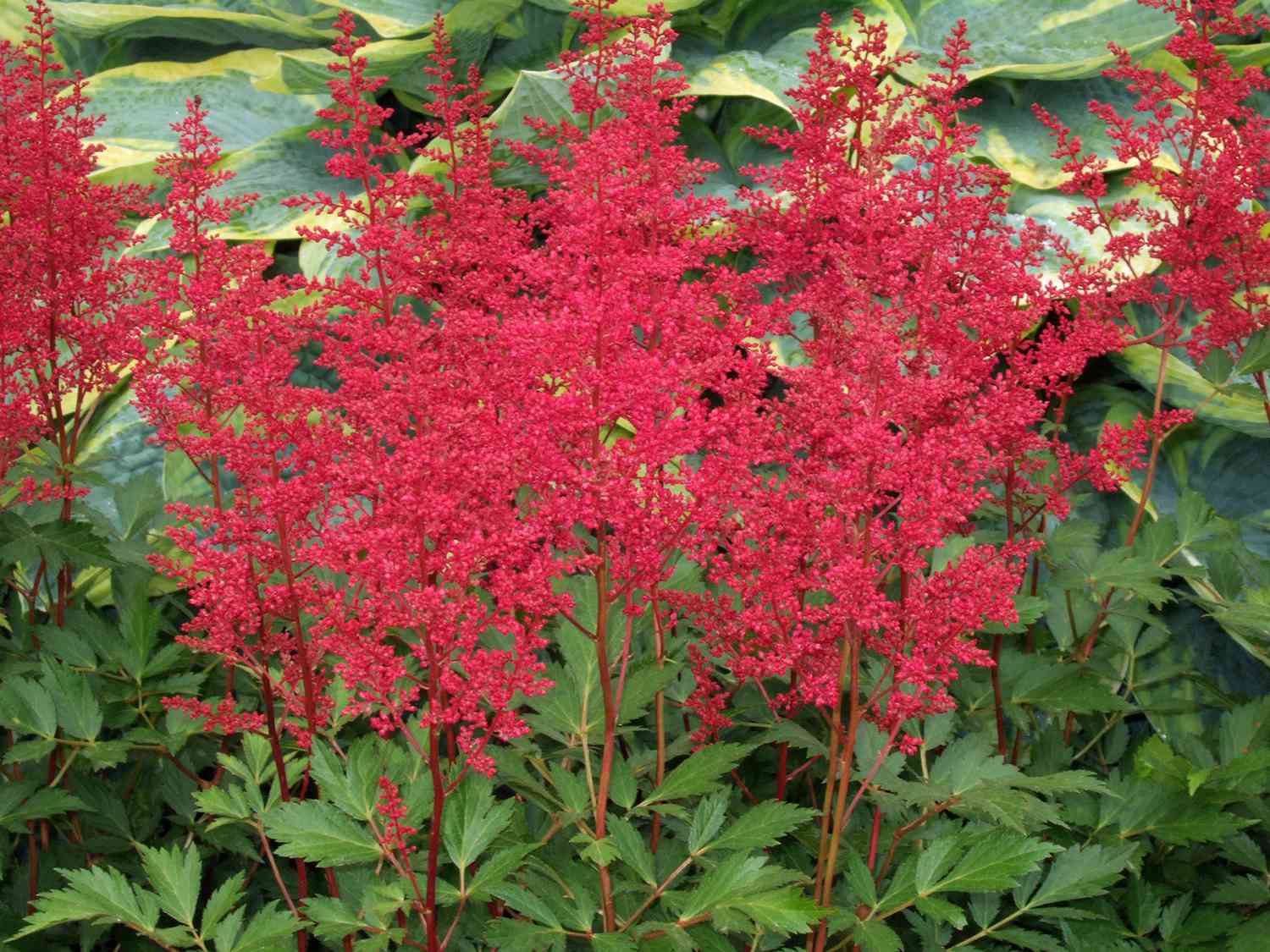
bright red astilbe xarendsii fanal

Astilbe produces colorful wands of small flowers, held above its foliage. | CREDIT: DENNY SCHROCK

Late Spring to Early Summer Seasonal Perennials for Shade

Say hello to the first days of summer with these perennials that love the shade. Bright colors and lush foliage make for exciting accents in a shady corner spot. Park a bench near your shade garden, grab a book, and relax with a view of your gorgeous perennials.

  • Astilbe
  • Coralbells (Heuchera)
  • Meadow rue (Thalictrum)
  • Foamy bells (X Heucherella)
  • Lady’s mantle (Alchemilla)
  • Yellow corydalis (Corydalis lutea)
close up of peony flowers

Peonies come in an assortment of colors, including several shades of pink. | CREDIT: KARLA CONRAD

Late Spring to Early Summer Seasonal Perennials for Sun

Welcome sunny days and warm weather with plants that can beat the heat. There’s plenty of variety among these low-maintenance early summer flowers, so it should be easy to choose a few that fit into your dream garden plan.

  • Bear’s breeches (Acanthus)
  • Baptisia
  • Fleabane (Erigeron)
  • Iris
  • Lamb’s-ears (Stachys)
  • Peony (Paeonia)
  • Geranium
  • Salvia ‘May Night’
Catmint and Pink bee balm garden near red home

The soft purple flowers of catmint combine well with the pink blooms of bee balm in this garden. | CREDIT: PETER KRUMHARDT

Summer Seasonal Perennials for Sun

When the heat starts to set in, it’s time for hardy, drought-resistant perennials to take over. You’ve got dozens of choices for summer flowers that can beat the heat, so go ahead and plant as many as you can fit in your yard.

  • Balloon flower (Platycodon)
  • Bee balm (Monarda)
  • Bellflower (Campanula)
  • Black-eyed Susan (Rudbeckia)
  • Blanketflower (Gaillardia)
  • Blazing star (Liatris)
  • Butterfly weed (Asclepias)
  • Catmint (Nepeta)
  • Coneflower (Echinacea)
  • Crocosmia
  • Delphinium
  • Evening primrose (Oenothera)
  • Dianthus
  • Garden phlox (Phlox paniculata)
  • Globe thistle (Echinops)
  • Hardy hibiscus (Hibiscus moscheutos)
  • Helenium
  • Hollyhock (Alcea rosea)
  • Hyssop (Agastache)
  • Knautia
  • Lavender (Lavandula)
  • Lily (Lilium)
  • Maltese cross (Lychnis chalcedonica)
  • Meadowsweet (Filipendula)
  • Mullein (Verbascum)
  • Penstemon
  • Pincushion flower (Scabiosa)
  • Red-hot poker (Kniphofia)
  • Shasta daisy (Leucanthemum superbum)
  • Veronica
  • Yarrow (Achillea)
  • Yucca
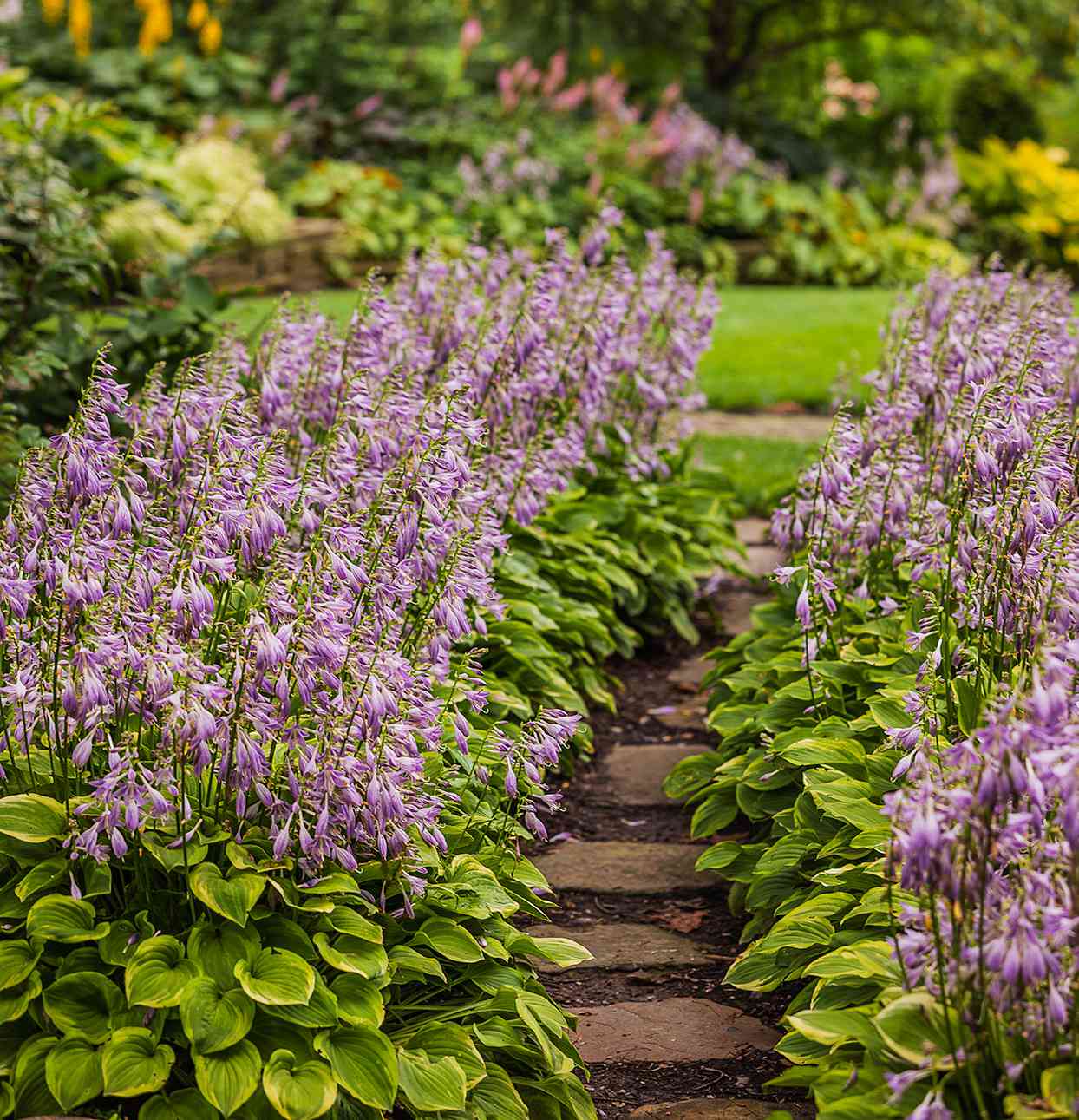
purple flowering hostas lining walkway in garden

Often grown for their attractive leaves, many varieties of hostas also have eye-catching flowers. | CREDIT: BOB STEFKO

Summer Seasonal Perennials for Shade

These perennials bloom in the summer but don’t necessarily enjoy the sun’s rays. Find a shady, cool spot in your garden for these low-maintenance plants.

  • Astilbe
  • Goatsbeard (Aruncus)
  • Hosta
  • Ligularia
  • Lilyturf (Liriope)
  • Lobelia
  • Meadow rue (Thalictrum)
  • Yellow corydalis (Corydalis lutea)
  • Yellow waxbells (Kirengeshoma)
russian sage perovskia atriplicifolia

When in bloom, Russian sage looks like a purple haze. | CREDIT: JOHN STRAUSS

Late Summer and Early Fall Seasonal Perennials for Sun

Summer is coming to an end, but autumn is just around the corner. Feel the soft, cool breeze and smell the fresh scent of these beautiful fall flowers as the leaves start to turn. Add these colors to your space to help the summer season live on just a little longer.

  • Aster
  • Black-eyed Susan (Rudbeckia)
  • Boltonia
  • Chrysanthemum
  • Coneflower (Echinacea)
  • Gaura
  • Hyssop (Agastache)
  • Japanese anemone (Anemone japonica)
  • Joe Pye weed (Eupatorium)
  • Obedient plant (Physostegia)
  • Russian sage (Perovskia atriplicifolia)
  • Sedum
  • Stokes’ aster (Stokesia laevis)
patch of flowering todadlily

The dainty flowers of toad lily light up shade gardens in fall when not much else is in bloom. | CREDIT: DENNY SCHROCK

Late Summer and Early Fall Seasonal Perennials for Shade

The sunny days may be dissolving, but these seasonal perennials will still thrive. Enjoy a few last blooms through the changing leaves with these shade-loving fall flowering plants. These seasonal perennials will perfectly complement a fall garden color palette.

  • Bugbane (Actaea)
  • Lobelia
  • Toad lily (Tricyrtis)
  • Yellow corydalis (Corydalis lutea)
  • Yellow waxbells (Kirengeshoma)

Source: (bhg.com)

Photo credit: ecoturfco.com

How to Clean Your Shower Head in a Few Easy Steps

Taking a nice, hot shower is one of the great simple joys in life. But if your water stops flowing freely, the mere idea of showering might stop you cold! Luckily, there’s a quick and easy fix for improving your water flow and pressure: All you have to do is clean your shower head! If you’ve never done this before, it may seem like a daunting task. But we can tell you how to clean a shower head in just a few easy steps. It really is so simple—we promise!

How to deep clean your shower head.

© Vladimir Grigorev / EyeEm – Getty Images gettyimages-1195223907

When shower heads fail to provide strong, constant water pressure, it’s often because the tiny holes are clogged with sediment built up from tap water, bacteria, and mold. If this sounds gross…that’s because it is! You should deep clean your shower head at least once a month to remove mineral deposits like limescale. Limescale not only slows water flow and reduces water pressure, but it can also serve as a breeding ground for health-threatening bacteria. To ensure that you and your family are showering in the cleanest possible conditions, follow the directions below.

You’ll need:

  • A gallon-size plastic food storage bag
  • Distilled white vinegar
  • A rubberband
  • A clean toothbrush
  • Baking soda

Some methods call for removing the shower head, but we promised you this would be easy—so let’s do it the easy way! Start by filling a gallon-size plastic bag with vinegar. Place your shower head in the bag and secure the bag to the shower arm with a sturdy rubber band or some heavy-duty tape or string. Make sure that the entire shower head is submerged in vinegar, adding more if necessary.

What kind of vinegar do you use to clean a shower head?

Distilled white vinegar is one of the best natural cleaners out there. This nontoxic cleaning marvel kills some household bacteria, dissolves hard-water deposits, and cuts through grime. It’s also colorless so it won’t stain surfaces. Plus, it’s affordable, and you’re likely to have it on hand in your pantry whenever you feel the need to clean your shower head.

How long should you soak your shower head in vinegar?

Let your shower head soak for a few hours. If there is an excessive amount of buildup, you should soak it overnight for best results.

When you’re ready, remove the bag and use a clean toothbrush to scrub away any remaining buildup or residue, if necessary. Then, use a dry microfiber cloth to wipe down the surface of the shower head.

How do you remove limescale from a shower head?

If the limescale buildup is really bad, you may want to go the extra mile (with minimal effort). To tackle stubborn deposits, simply add a few tablespoons of baking soda to the vinegar before soaking your shower head. The natural abrasive will help open clogged passages.

It’s as simple as that! Now, we can appreciate that this may not be your favorite activity, but it’s totally worth it. By following this easy how-to, you’ll be singing in the shower in no time!

Article by Tierney McAfee for The Pioneer Woman©

This Home Necessity Is Disappearing From Store Shelves

 © Provided by Best Life

Experts say a paint shortage is hitting stores.

If you’re looking to redecorate your home in the near future, you may want to leave painting off your to-do list. Experts say it could be hard to find the paint you need. “Some of the most common used paints are out of stock,” Mike Marcewicz, founder of Mike’s Painting and Home Improvements, told Bay News 9. According to Chemical & Engineering News, paint makers are not receiving their full orders of raw materials and having to pay higher prices for the supply they do get, which has led to a fewer paint products hitting store shelves.

The paint shortage was exacerbated by this year’s major winter storm.

Paint supply chain Sherwin-Williams was already suffering as a result of the COVID pandemic. However, the February winter storm that hit Texas added further constraints to the supply chain.

Increased demand for paint is not helping the situation either.

This paint shortage is coming at a time when demand for paint is increasing—which will only make things worse, experts say. We’re approaching painting season, after all. Summer is typically regarded as painting season because it is the optimal time to paint your home exterior due to warm weather and scarce rain, according to Teel Painting.

You’ll likely have to pay more for the paints that you can find.

If you do find any paint in stores, it will likely be marked up from what you’re used to paying. Sherwin-Williams has already issued a price increase on consumer paint brands as a result of shortages and increased pricing of raw materials. And more price hikes may be coming.

Article by Kali Coleman for BestLife

Source: This Home Necessity Is Disappearing From Store Shelves (msn.com)

8 Stinging Caterpillars All Home Gardeners Should be Aware of

Protect Yourself

Most gardeners are aware of the slugs, bugs, and other pests that can destroy their plants. This includes many caterpillars, but a few can hurt the gardener as much as the garden. Their stings or hard spines might smart enough to warrant steering clear and taking extra precautions to keep them away from your leafy greens. Some are unmistakable, and others take a little know-how to keep them out of the garden and away from working hands.

 © istockphoto.com

Flannel Moth Caterpillar (The Asp)

The flannel moth caterpillar, also known as the puss caterpillar, or “the asp,” is covered in fine silky hair that hides its poisonous spines. Once those spines pierce the skin, they cause a painful stinging rash that can last for several days. They’re found in Texas and a few other Southern states. However, they’re not common and live mostly in trees. Their furry bodies are hard to mistake. As long as you know what they look like, you should be able to avoid them.

Saddleback Moth Caterpillar

The brightly colored saddleback (moth) caterpillar is far more striking than the moth it becomes. Found in Alabama and Florida, these little guys have a fleshy pair of horns on both ends of their bodies with a bright green back and dot in the center. Once you’ve seen a picture, it’s easy to see where they get their name. The hairs on their horns contain an irritating venom that causes swelling and a painful rash.

Io Moth Caterpillar

The Io moth caterpillar’s green body is covered in black-tipped venomous spines. These caterpillars live in the eastern and midwestern United States. They can be seen living together and “marching” in single file in their early stages before they venture out on their own to enter the cocoon phase. Their intense green bodies blend very well with summer foliage, making it easy to accidentally brush against the body and get a painful sting.

Stinging Rose Caterpillar

The stinging rose caterpillar’s strange appearance might attract attention but avoid this brightly colored, striped, and horned caterpillar. The stinging rose is found only in the eastern United States, and it’s relatively uncommon. These caterpillars prefer rose foliage (hence their name), dogwood, apple, cherry, oak, poplar, maple, hickory, and bayberry. Some develop red or orange stripes, while others are yellow. They’re hard to miss, and their bright colors warn enemies of their venom.

The Spiny Oak Slug

© Wikimedia Commons via Innotata

The spiny oak slug has stinging hairs on its many extended lobes. Their body features mottled stripes, making them a striking specimen. They typically hide on the underneath side of foliage, so they are difficult to detect until brushing the hairs. Most people experience a painful sting. However, there’s a small percentage of people who have a more serious reaction to the sting and may require medical attention. The good news is that these caterpillars are not particularly common, even though they are found throughout North America.

White Flannel Moth Caterpillar

 © Wikimedia Commons via Jarekt

The black, yellow, and red-colored white flannel moth caterpillar has tufts of long hair coming out of its yellow mounds. Those long black hairs don’t sting, but the short hairs at the base of the tufts do. These caterpillars come out in late summer throughout southern, midwestern, and eastern areas of the United States. Once the caterpillar goes through metamorphosis, it comes out a silky white moth that’s not venomous whatsoever.

Monkey Slug Caterpillar

© Wikimedia Commons via Satyrium-commonswik

The monkey slug caterpillar doesn’t look much like a caterpillar or a slug, really. In a way, it resembles a crumbled, dying leaf. Its tentacles and thick hair disguise the sharp spines that house its venom. Most people wouldn’t want to pick up this strange creature because of its odd, arachnid-like appearance, but the stinging spines seal the deal on avoiding this New England native.

Buck Moth Caterpillar

Buck moth caterpillars love the oak trees predominantly found in the eastern United States, but they also show up in some midwestern and southern states. These dark-colored caterpillars feature tufts covered in venomous spines that cause a red, stinging rash. They come out in the spring and are readily found in and around oak trees.

Article by Stacey L. Nash  for bobvila©

Source: 8 Stinging Caterpillars All Home Gardeners Should be Aware of (msn.com)