I feel it’s my duty to tell you what the garden and landscaping trends of 2023 are going to be tout de suite. After all, gardens don’t grow in a day, and winter is the best time to plan.
What’s Going to Be Hot in 2023
Miranda Estes
Sowing Sanity
In Monrovia’s most recent study, homeowners who strongly agree with the statements “Gardening is good for my mental health and well-being” and “Gardening helps me feel hopeful and positive” increased over last year. “At the beginning of the pandemic, gardening was more about freshening up the areas where we were spending more time,” says Katie Tamony, Monrovia CMO and trend spotter. “Now homeowners are maximizing and personalizing their outdoor space. Gardening, and just spending time in an outdoor space that you have created, relieves stress and makes us feel more positive.”
Chad Mellon
Maximal Materials
The Maximalist look is gaining steam outside, according to Kristin Swenson, the communications manager at Yardzen. “Customers are asking for more bold and playful decor details—think a pop of handmade tile on a patio or around the edge of a pool,” she says. The idea is to use a variety of tones, volume, and texture. If you do it right, the look will be intentional, but not overly messy.
Caitlin Atkinson
Abundance Abounds
The Garden of Abundance trend is all about making your garden a bit wild, more productive, and connected to the earth. Monrovia says it’s time to mix in edible plants with the rest of your landscape, rather than containing them in raised beds. “We’re seeing gardeners appreciating the ornamental beauty of edible plants and mixing them in with their other trees and shrubs,” says Tamony. “An abundant garden incorporates the usefulness of edible plants with the love of pollinator plants. It also includes providing a season-long habitat for birds.”
Jennifer Yakey-Ault/Getty Images
The New Victorians
“Blame it on Bridgerton,” says Tamony, referring to the Netflix series. Nostalgic plants like roses, lilac, hydrangea, and hollyhock are back. Think of this trend as an elevated version of a cottage garden. To make it work, the look is casual but not disorganized with a palette of pink, purple, and white, and pretty, delicate foliage. White fences, gravel or brick pathways, and birdbaths are also de rigeur. Article by Deanna Kizis.
More 2023 garden ideas are available to view at the link below:
The 9 Garden and Landscaping Trends of 2023 to Know About (sunset.com)
It’s been four months since you started dating Jim. You’ve gone hiking, binged the entire second season of Fleabag together and eaten at his favorite pizzeria so many times you feel like the staff knows you’re together. But you haven’t met any of his actual friends—let alone any family. Wait, you did run into his college buddy on the street, though! And they chatted for a bit…but now that you think about it, he glazed right over an introduction, didn’t he? And when you posted a pic of you two, he asked you to delete it. Welp, take a seat. We’re sorry to say it, but it sounds like this Jim character is stashing you.
Stashing is when one person in a relationship makes the conscious decision to hide the other person from his or her inner circle, and yes, that includes both in real life and on social media. (Deep breaths.) Of course, this is so much more a reflection of the stasher than the stashee, but c’mon, it’s downright rude and hurtful as hell.
Great, the person I’m seeing is stashing me. Why is this happening?
There’s no one reason why stashing happens, but we spoke with marriage and couple’s therapist Irina Firstein about it. She told us the stasher may be stashing you because they 1) are embarrassed by or have issues with their family, 2) don’t see a serious future with you or 3) are carrying on another relationship simultaneously. None—we repeat, none—of these reasons (or any others) are good enough to justify making you feel like dirt but having a little bit of insight might take the edge off.
How do I bring up stashing to the person I’m seeing?
“Ask them why you haven’t met anyone important in their life,” Firstein says, “and follow up with questions if they give you the runaround.” (Psst: “There hasn’t been a convenient time” can be filed under “runaround.”) The conversation might bring you closer together over some shared vulnerabilities—maybe the so-called stasher is not on speaking terms with certain family or friends after a falling-out—but there’s also the potential for the opposite to happen.
What if I’m met with backlash?
If this person is doing something hurtful to you and they respond in any way that’s not supportive, understanding or at least curious, it’s time to reevaluate the relationship, because let’s be honest, that wasn’t that tough of a question. Sidestepping your feelings is a major red flag. And, as Firstein sees it, “If they play ignorant, that’s a form of manipulation.” Tough love, people.
Remember that a caring partner will not want you to feel this way, and if they really do have a good reason for keeping you stashed, like a family matter or they just weren’t “there” yet, they’ll be receptive to the conversation and interested in moving forward. If not, then you deserve to be with someone who wants to roof you. (That’s the term we just made up that means “shout from the rooftops that they get to be with you.”)
The succulent trend is showing no sign of slowing down, as their unique appearance, hardiness and versatility has made them incredibly popular amongst green and black thumbs.
Succulent plants come in a huge range of color’s, shapes and sizes, and they are a stunning way to add texture to a garden or a low-maintenance method of introducing plants indoors.
Here are our best tips for growing succulents and 12 diverse options to plant in and around your home.
What are succulents?
Derived from the Latin word sucus, meaning sap or juice, succulents are a group of plants that store water in their thick, fleshy leaves. This allows them to be drought resistant – thriving in dry, hot climates. Their nature allows them to be tolerant to neglect, so they make for excellent indoor plants.
Getty
How to care for succulents
Climate
Succulents need an open sunny position and will grow in temperate to hot climates. Some are frost-tolerant. Others are very sensitive to cold so in cool areas, check before you buy.
Soil
When planting in pots, the best soil for succulents is free-draining cacti and succulents potting mix. If you’re planting them in the garden, sandy free-draining soils work best.
Water
Succulents require minimal watering. Test the soil with your finger – if it feels dry, give it a little water. Direct the water to the roots and avoid it sitting in the crown of the plant as this can promote rot.
Planting
If planting your selection of succulents in containers, almost any pot, tub or trough will do the trick! Just make sure you allow enough room to cater for the roots of the plants, and for sufficient drainage. Repotting is only ever required when the roots start to burst out the base of the pot or become obvious on the surface of the soil. This is a job best done in spring.
Propagation
A beauty of succulents is they’re so easy to multiply. Snap off a short stem with leaves attached, leave in a dry area until the end forms a callus or starts to sprout hair-like roots, then plant in potting mix.
Types of succulents
1. Burro’s Tail (Sedum morganianum)
Getty Images
Known as Burro’s Tail or Donkey’s Tail, this Mexican succulent is perfect for is hanging baskets, with its heavily laden stems trailing down. It has thick, tapering blue-green leaves that sit on the rope-like stems that grow up to 30cm long. It produces pink flowers. It is very hardy and will thrive on neglect, however it will need protection in colder climates. Most sedums prefer full sun to part shade and should be watered on a regular basis with good drainage.
2. Aloe Vera
Getty Images
‘Allo, Vera! These attractive plants not only possess amazing healing properties, but they’re also very easy to grow. Humans have been using the sap from the Aloe plant to soothe burns, abrasions and bites. Aloe Vera is best planted in frost-free zones and like full sun or light shade. Semi-frequent watering is required, however you can let the soil dry in between watering without the plant suffering too much. They can be found in many sizes, including miniature versions. The larger types can grow leaves that extend up to 1.2 metres, so make sure you choose the right type for your space.
3. Foxtail agave (Agave attenuata)
Getty
Agave can be grown in pots or in garden beds and are drought tolerant, so they are the perfect plant for the lazy gardener. Among the most architectural plants, agaves feature bold succulent leaves that set the tone for wherever they’re planted. Many varieties bear sharp spines along leave margins and at the leaf tip, which adds to their dramatic presentation. The bluish-green rosettes naturally spread by producing offsets at the base of the plant. It is an excellent choice for sunny, hot, dry areas, especially desert regions, with good drainage.
4. Echeveria
Getty Images
Considered one of the most attractive succulents, due to their colours and variations, echeverias are extremely hardy and can tolerate extended periods without water. In fact, what one of the issues with any succulents is over-watering, so be sure to let the soil dry out completely before water again. They do well in unglazed clay pots, which allows the water to evaporate. Their rosettes can be as little as 2cm, up to 50cm in diameter. Colouring can range from white to orange, and pink to red. These low growing evergreen succulents fall under a category called hens-and-chicks. These succulents have an original rosette called the ‘Hen’, which produces tiny rosette offsets that are known as the ‘Chicks’.
5. Sempervivum tectorum
Getty Images
Sempervivum tectorum – also called houseleeks – are often likened to rubbery roses. They’re also known as hens-and-chick and look similar to the Echeveria variety. However their care requirements are quite different – Sempervivum are a tough, hardy plant preferring cold weather. Their leaves are narrower than those of Echeveria and have pointy tips. They produce small pink, red or orange star-shaped flowers.
6. Blue chalk sticks (Senecio serpens)
Getty Images
These succulents can grow up to 30cm tall and produce yellow daisy-like flowers in summer. They are perfect as a ground cover plant and do very well in sunny positions. It has a dense growth habit and grows very quickly over a large area, so it is perfect for those areas of the garden you would like to be maintenance-free. In order to maintain its bushy clump, give it a little prune after it flowers.
7. Jade Plant (Crassula ovata)
Getty Images
The jade plant – also known as a money tree – is considered a symbol of good luck. The South African native is characterised by thick stems and thick glossy green leaves and can grow up to one-and-a-half metres tall. The most important consideration in caring for a Jade Plant is proper watering. You should never let a jade dry out, but overwatering will cause root rot. Position your plant in a well-draining terracotta pot for good air movement through the soil, in a bright, sunny spot.
8. Pincushion Cactus (Mammillaria)
Getty Images
The Mammillaria family of cacti includes around 250 different species and they’re the most popular cacti to grow at home. They form small, round or barrel-shaped clumps, growing no more than 15 centimetres in height. They’re easy to care for making them suitable for beginner gardeners. The pincushion cactus hails from Mexico, making them drought tolerant and sun-loving. Ensure they are potted in well-drained, gritty soil and positioned in full sun. Allow the soil to dry out completely between watering and stop watering entirely during the winter months. With the right moisture, heating and a dormant period – your pincushion cactus might produce stunning flowers in spring.
9. Snake plant (Sansevieria trifasciata)
Getty Images
The snake plant – also known as mother in law’s tongue – is a succulent that any black thumb can keep alive with minimal effort. Native to tropical West Africa, the plant gets its name from its long, pointed, patterned leaves that are reminiscent of a snake. It makes great indoor plant, tolerating low light (but growing best with medium to high light) and it should be left to dry out in between waterings. Research by NASA has found that these succulents are one of the best air purifying options for your home, removing toxins like formaldehyde and benzene from the air you breathe.
10. Zebra Plant (Haworthia fasciata)
Getty Images
This small, striking succulent doesn’t require much TLC. Growing no more than 10 to 15 centimetres, it has distinctive zebra-like stripes across its spiked fronds. Position your plant in full sun and let soil almost dry out between waterings.
11. String Of Pearls (Senecio rowleyanus)
Getty Images
String of pearls – which feature small green pearl-like balls along dangling stems – are an eye-catching addition to your space, particularly when draped in a hanging basket. Like most succulents they are very drought tolerant, requiring bright light, well-drained soil and minimal watering. Another added benefit it that they grow quickly (dangling up to around 60 centimetres) and are easily propagated.
Looking for high quality gardening advice? We’ve rounded up the best gardening experts to follow on Instagram, YouTube, and Twitter. We know our readers are partial to organic gardening, so you’ll find accounts run by organic gardeners. Some do tutorials or questions and answers, while others simply show you photos of what their lives are like. We’ll tell you a little about each one of our recommendations and link you to them as well.
Find inspiring photos of plants grown from Baker Creek Seeds on this picturesque Instagram account. You’ll also see occasional photos of the growers and seed packets or catalogs alongside the vividly colored fruits, vegetables, and flowers.
If there is such a thing as tomato porn, it exists on carmelbellafarm’s Instagram page. The velvety, deep black skin of Black Beauty tomatoes is captured in one photo, and the next has a tomato harvest pictured as a rainbow-colored jumble. If you love tomatoes, you’ll want to follow carmelbellafarm.
Following the david_austin_roses Instagram account is worth it simply for the photos of heavy-headed, petal-packed roses. But that’s not all you’ll find. This account also offers tips about rose growing, breeding, feeding, and pruning as well as an ask the expert feature.
As a bonus alongside plenty of garden photos, you’ll find a peek into homesteading life, with images of a log cabin house, happy-looking chickens, and wreaths made with flowers from the garden. Allison (who runs the account) also provides gardening tips and how-tos every once in a while.
This Arizona-based organic gardener documents the progress of her garden on this Instagram page. There are also tips for vegetable gardeners and those who grow flowers alike.
In the style of People of New York, the humanswhogrowfood Instagram account presents photos of people from across the globe growing all different kinds of food. It’s interesting to see how much the gardeners have in common despite their differences—starting with the smiles of pride as they show off their crops.
This home gardener is devoted to organic, sustainable growing practices. See the results of their hard work and images of the fruits and vegetables as they grow at the link above.
This profile is cultivated by the Royal Horticultural Society, the top gardening charity in the United Kingdom. Along with photos of their gardens in sunshine or snow, you’ll find how-tos and tips for growing all kinds of vegetables, fruits, flowers, and other plants.
Kew Gardens is a world-famous garden and a center of botanical research. They share short facts about plants, show off images of their gorgeous gardens, and even have a video series. If you can’t get to Kew Gardens, the video series is the next best thing.
MotherEarthNews will occasionally post about plants or gardens, but those aren’t the focus. This news provider offers articles that hone in on green living and sustainability.
Like MotherEarthNews, The Daily Green reports on all things green, so while there will occasionally be content about gardening, that isn’t the focal point.
We’ve already recommended RHS’s Instagram account; how could we leave out their Twitter? The RHS runs question and answer sessions right on Twitter alongside striking views of the RHS gardens.
EdibleAcres is operated by a permaculture nursery located in New York. They write, “We’re focused on low and no-tech solutions and permaculture principles in all our work. This video channel documents our journey.”
GrowingYourGreens produces a steady stream of video content about gardening tips, tricks, and how-tos. Occasionally, it looks at what John is growing in his own garden.
Mark is passionate about teaching people how to get great results in their gardens using cover crops, dried leaves, wood chips, and worm castings. He writes that these items are “the ONLY things I use in my 22 acre farm and backyard garden.”
This name showed up on many of the lists we checked as we did research for this article. The profile promises two to three videos weekly, with new content on Monday, Wednesday, or Friday. Videos focus on “100 percent organic gardening, self sustainability, healthy recipes, and much more.”
You may be looking for new YouTube accounts so you can subscribe or add their videos to your playlists. Perhaps you’re looking for some gardening-related Instagram accounts to follow. Or maybe you’re seeking new gardening Twitters. A lot of you will probably be looking for all three. Whatever you’re looking for, we’re betting you found at least one recommendation that caught your fancy. Go ahead and check it out, then come back and tell us who you follow on YouTube, Twitter, or Instagram for your gardening-related content—especially if it focuses on organic gardening.
Before running the vacuum, lightly sprinkle carpets with baking soda to remove musty odors and pick up excess dirt.
Hang activated charcoal in closets
Bags of activated charcoal can be found at many retailers, and are great for absorbing smells from smelly closets, car trunks, and other damp, dark places. Apply a few drops of essential oil to add scent or purchase bags that contain fragrant herbs like lavender alongside the charcoal.
Make DIY room sprays
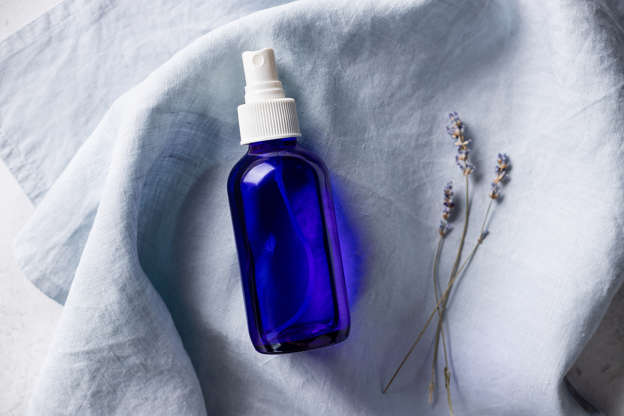
With a little water, rubbing alcohol, and essential oils, it’s easy to make a DIY room spray that will make your space smell great. Added ingredients like vodka and vinegar can help neutralize odors in soft surfaces like couches and carpets.
Use vinegar in the laundry to remove musty odors
Forget a load of laundry for a couple of days? Add in a cup of vinegar to remove mildew smells from towels and other garments. Vinegar can also be used to clean the washing machine, or as a germ-killing additive in loads of laundry with smelly workout gear.
For more of the same, copy and paste the “Source” link below.
Article by Amy McCarthy for Yardbarker™
Source: 20 ways to make your home naturally smell amazing (msn.com)
As the weather gets warmer, you’re probably itching to get off your couch and spend as much time as possible outdoors. While it’s nice to get away from your home for a while, it’s sometimes even nicer to have an oasis in your own backyard to turn to. You definitely don’t need to have a large outdoor space in order to transform it into something cozy, comfortable and enjoyable — you just need to have the right decor and setup.
@ KatarzynaBialasiewicz – Getty Images
A great outdoor space requires some comfortable seating, versatile lighting, shade for extra sunny days and some greenery (real or fake). Add in some decor that you like, such as funky planters, a colorful rug or some whimsical string lights, and you’ve got a space you’ll want to return to each day (or night). Here are some of our favorite products you can buy from Amazon to make this a reality.
This doubles as a small table and a hidden cooler all in one. You can choose to keep the lid lower when you want to only use it as a table, or you can elevate the lid to show off the hidden cooler underneath (and still use the lid as a tabletop). It’s 7.5 gallons and can hold up to 40 cans, and it’s made of a water-resistant resin so it can withstand the elements.
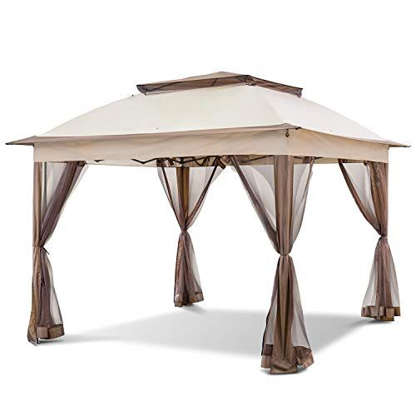
Add in some sun and bug protection with this pop-up gazebo that can go over a table and chairs set or a couch on your patio. It provides 121 square feet of coverage, and has an air vent on top to keep you cool inside. You can let down the mosquito netting when necessary, or keep it open for a breezier feel.
Adirondack chairs are a versatile and comfortable seating option that makes for a nice piece of accent furniture, but can also stand alone. This one is extra convenient since it folds for easier storage. The classic design means it will never go out of style.
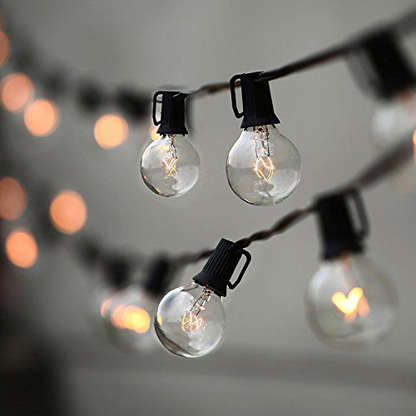
String lights are a popular outdoor accent lighting option for a reason: they instantly make any space feel a little bit more magical. These globe string lights are the perfect size and shape, they’re easy to set up, and they give off just the right amount of light for when you’re hanging outside in the evening or night.
Outdoor furniture can get really pricey, but if you don’t want to drop a lot of money on something you’ll only use for a few months, this set is proof you don’t have to. This modern sectional sofa comes with thick, comfortable cushions, as well as a glass top table. You can keep it together to use it as a sofa, or separate it into two chairs.
Give your space a luxurious feel with this super comfortable daybed that encourages all of the lounging and sunbathing. It has a retractable canopy for shade, and can comfortably hold up to four people at a time. The seats can be left combined or separated, and the cushion is thick and comfortable.
To see more of this article written by Jessica Booth for Good Housekeeping, and see more idea’s for your backyard, click the source below.
Our team has discussed the death of the jean for quite a while now, and with winter ahead, the last thing any of us are putting on is real pants. But just because you’re in an exclusive relationship with your leggings doesn’t mean you can’t look amazing for every Zoom meeting and mirror-walk-by of the day. Putting on a fresh face and experimenting with my makeup looks and hair routine have pretty single-handedly given me something to look forward to and stay motivated throughout my day. Ready to try something new beyond your daily BB cream and top knot? Here are eight beauty trends anyone can wear that take your leggings and a tee to a solid 10/10:
1. Winged Liner
This trend isn’t going anywhere, and this fall, we’re seeing it in practically every shape, color, and finish. Now that we have a little extra time in the morning, it’s not the worst idea to finally master your perfect winged liner look. Then, you can experiment with different shapes, styles, and colors. I’m loving a classic, deep black wing when I’m just heading to the grocery store because it adds a little bit of interest to my eyes (the star of the show since I’m wearing a mask!) without taking too much effort. But I also love the metallic liner trend, especially for holiday. A wash of gold or silver looks cool and editorial; like you just stepped out of Pat McGrath’s chair.
2. Brushed-Out Curls
If you have naturally curly or textured hair, this is a breeze (although it might feel a little unnatural if you’ve abided by the “don’t brush your curls!” rules of the past). As a straight-haired person, I get the look by curling my hair at night with a small curling wand (my hair is fine, so I use a ½ in, but I’d say to go ½ in smaller than your normal-size iron), set it with a hairspray, sleep on it, and then brush them through in the morning. I’ll do it while I’m watching TV or listening to an audiobook, and then I’m guaranteed sexy, voluminous hair for days. I’m also loving this look with a ponytail!
3. Multi-Masking
So, you can’t *exactly* wear this for a work meeting, but I’d be damned if I left out one of the best WFH perks out there: masking while we work. I’m all for a self-care night filled with my skincare favorites, but sometimes my skin calls for an all-day mask situation. Something hydrating is great for dry, winter skin; you can opt for a depuffing, oxygenating mask with a facial massage in the morning with your coffee; or I swear by a purifying mask after a hot, steamy shower when I wake up with a breakout. I especially love this trick with undereye masks. The serum in an undereye mask stays on your skin, leaving it hydrated and plump for the entire day—why would I waste that when I’m just heading to sleep?
4. Beaming Highlight
There’s nothing like catching yourself in the mirror when your cheekbones are highlighted. And I’m not talking your run-of-the-mill highlight either; I mean “aliens up in space are discussing the beam of light coming from an undisclosed North American location” type of glow. When you’re wearing an otherwise understated look, adding a striking highlighter to your cheekbones can turn up your confidence and make a look seem a lot more intentional (when really you just rolled out of bed). I also love having a bit stronger cheek highlight for Zoom meetings—I typically powder more because the webcam can make you look shiny, so adding extra highlight makes it look like your skin is truly perfect.
5. Grey, Plum, and Taupe Shades
Another iteration of this look is using matte shades for a more retro-style. Think Ariana Grande in the “Positions” music video. Create a wing with a cool-toned medium brown shadow (if you have a medium or dark skin tone, apply a white/cream shadow all over the lid to make this brown pop!) and a brush and bring the wing over your crease. This look is actually pretty wearable but looks so impactful (some might say West Wing worthy).
So, I need to stop after this photo because I don’t want you to think that these are the latest go-to styles of 2024. Truth be told, they are circa 2020. I had to fix the post or else I might break my blog. (j/k)
Athleisure has come a long, long way. From workout clothes to lounging to now even business-meets-athleisure brands, the go-to outfit for many (especially in COVID-19 times) probably includes at least one piece of athleisure. And while the category expands, it can be hard to keep up with all of them. (Plus, are they even good?) You’ve got this. Or rather, we have. Here are five newer athleisure brands you should be adding to cart.
Photo: Courtesy Solely Fit and ENVT / W+G Creative
Athleisure has come a long, long way. From workout clothes to lounging to now even business-meets-athleisure brands, the go-to outfit for many (especially in COVID-19 times) probably includes at least one piece of athleisure. And while the category expands, it can be hard to keep up with all of them. (Plus, are they even good?) You’ve got this. Or rather, we have. Here are five newer athleisure brands you should be adding to cart.
OFFLINE by Aerie
Photo: Courtesy OFFLINE / W+G Creative
Aerie just launched a new athleisure line called OFFLINE made for movement and comfort (aka working out or ordering takeout from your couch). Available online and with two retail store locations to come, these leggings, tanks, sports bras, and more are all super soft without being sloppy. Try the Real Me legging ($40 – $45) as a go-to for every day or the Goals legging ($50) to lift the booty and have you feeling (and looking) good.
Solely Fit
Photo: Courtesy Solely Fit / W+G Creative
Founded by ABC News reporter Stefania Okolie, this fitness apparel line launched right in the middle of COVID, and has everything to make your body stand out. As “elevated athleisure” the shapes and sillhouettes of this line are super strong and flattering for any body. The favorite: The Moremi Biker Shorts ($54).
Enavant Active (ENVT)
Photo: Courtesy ENVT / W+G Creative
Chic. Chic. Chic. I typically shy away from using that word, but this athleisure brand lives up to it. From the French phrase “en avant,” meaning “to move forward” this brand is committed to sourcing the highest standards of technical materials, which is why it spent two years perfecting its trademark fabric Enavance™. Spun from luxury Italian fibers, Enavance™ boasts revolutionary performance while feeling incredible against the body. As a premium line, the pricing can seem high, but as someone who has lived in her sets for days at a time (I mean, what? Who? Not me…) I can say they’re so comfortable and flattering. My favorite set? The Malibu Bra Top ($88) with the Sunset Leggings ($89).
WVVY
Photo: Courtesy of WVVY / W+G Creative
Wellness influencer Britney Vest joined forces with HSN to launch her own athleisure brand this summer called WVVY, with sizing up to 3X and everything under $100. (Size inclusive and budget-friendly? Yes, please.) The line was inspired by Britney’s love for California and the ocean, and features leggings, sports bras, biker shorts, jogger pants, and t-shirts. Try the cropped hoodie ($47) paired with the lace-up legging ($48).
Mind Body Love
Photo: Courtesy Mind Body Love / W+G Creative
The new workout collection from the line “Peace Love World,” by Alina Villasante is full of liveable styles in mostly black and white. It launched with QVC in June, and consists of eight key pieces for everyday workouts and post-workout style. Sizes go up to 3X, and feature designs in petite, regular, and tall. Some standouts? The performance tank ($38) with a great square neck and the biker shorts ($51) with secret pocket.
When packing for the beach, hats are crucial, both for your look and to protect you from the sun. If you still haven’t found a hat to your liking or in your price range, however, let’s try another option: Amazon. After all, you can find some amazing white t-shirts on there, not to mention work totes. So, there’s hope that the perfect hat awaits you. I perused a ton of hats on the marketplace, and I selected the best ones, ahead, based on style, function, price, and reviews. Since the only other thing you have to go on are photos, other people’s testaments are super important when deciding between two or three styles. Before you even think about laying out in the sun this season, make sure you’re armed with one of the hat options below. Don’t forget about the sunscreen, too.
Even before the COVID-19 pandemic, tie-dye was having a high fashion moment; the psychedelic swirls were all over the S/S20 runways. Fast-forward a few months, and the trend has evolved from high fashion to “home fashion,” thanks to tie-dye sweatsuits becoming the unofficial quarantine uniform. There’s no need to splurge on “luxury loungewear” for this trend, because you can get the look at home. Honestly, you can tie-dye anything: Sweatshirts, sweatpants, socks, sheets, shirts, even shoes. So grab an old item of clothing, and let’s get going!
Step 1: Gather Supplies
I suggest getting a tie-dye kit—that includes everything you need and has 15 different colors. Your must-have items include:
Squeeze bottles for the dye
Gloves
Dye or bleach
Rubber bands
Step 2: Get Your Workstation Ready
Tie-dying is a messy activity. I suggest you work outside, or somewhere like a garage or an unfinished basement. If you’re doing this inside, make sure you lay down towels or plastic to protect your space.
If an outdoor space isn’t an option, try your bathtub or shower.
Step 3: Pick Your Design
There are so many different swirls and patterns when it comes to tie-dye. There are no wrong answers here—you can go bold and bright with several shades, or stick to one color. The beauty of tie-dye is that the basic steps are the same no matter which design you choose. Once you have the steps down, the ways you twist, fold and place rubber bands on your shirt will determine the design.
I’m going to break down the classic spiral on a T-shirt, because you can’t beat the classics, but feel free to follow these steps with your own original design or a different pattern.
The Classic Tie Dye Spiral
Prepare the item. Start out with a pre-washed T-shirt that is still damp—damp, but not dripping wet. Lay the shirt flat on a surface that can get messy.
Twist the fabric. Pick a spot in the center of your shirt. Pinch the fabric and twist it in a spiral motion. Continue twisting the shirt until it looks like a cinnamon roll.
Work your rubber bands. Grab your rubber bands and wrap them around the shirt, creating six or more wedge shapes. This will create our spiral design. The placement of your rubber bands and how your twist your shirt will determine the end design.
Dye it. Throw on some gloves, grab your squeeze bottles of dye, and apply a color to each wedge.
Let the item sit. The shirt needs to sit in order to absorb the dye. Place your shirt in a Ziploc bag for anywhere between eight and 24 hours (the longer the dye sits, the more intense your color will be.)
Rinse it.After you let your shirt soak, it’s time to rinse it under cold water. Rinse until the water turns clear. Remove the rubber bands and rinse again.
Wash it. There will still be some dye left in your shirt. Throw it in the wash, but separate from your other clothes so that the dye doesn’t bleed on anything else.
Allow it to dry. Finally let the shirt dry. You can either throw it in the dryer or hang to dry.