No More Weeding! These 11 Perennial Flowers Can Outcompete Weeds

Weeding is one of the least enjoyable tasks for any gardener. Constantly battling unwanted plants can take away the joy of growing your garden. Fortunately, there are perennial flowers that not only add beauty to your garden but also outcompete weeds, making your life much easier. As a gardener who loves to see vibrant flowers without the hassle of weeds, I’m excited to share these wonderful plants with you!

We’ll explore 11 perennial flowers that can effectively suppress weeds by outcompeting them. These plants are hardy, vigorous growers that create dense foliage, preventing weeds from gaining a foothold. Let’s dive in and discover how these amazing flowers can transform your garden into a low-maintenance haven!

Coneflower


Coneflowers (Echinacea) are not only beautiful but also excellent at outcompeting weeds. Their large, daisy-like flowers and strong root systems allow them to establish quickly and dominate garden spaces. Coneflowers’ robust growth creates a dense mat of foliage, which shades the ground and prevents weed seeds from germinating.

To grow coneflowers, plant them in full sun and well-drained soil. They are drought-tolerant and require minimal maintenance once established. Their long blooming period from summer to fall ensures your garden remains vibrant while keeping weeds at bay. I love these flowers for their beauty and practicality!

Daylily


Daylilies (Hemerocallis) are known for their vibrant blooms and tough nature. These perennials spread quickly through their fibrous root systems, forming dense clumps that crowd out weeds. Daylilies come in various colors and bloom throughout the summer, adding continuous color to your garden.

Plant daylilies in full sun to partial shade and well-drained soil. They are remarkably low-maintenance, requiring little more than occasional watering and deadheading to remove spent blooms. Daylilies are perfect for gardeners looking to reduce weeding while enjoying a burst of color!

Hostas


Hostas are beloved for their lush foliage and shade tolerance. These perennials form large, dense clumps that effectively suppress weeds by covering the soil surface. Hostas are available in a variety of leaf shapes, sizes, and colors, making them versatile and attractive garden additions.

To grow hostas, plant them in partial to full shade and rich, well-drained soil. They require regular watering, especially during dry periods. Hostas’ expansive leaves create a beautiful ground cover that prevents weeds from emerging, making them ideal for low-maintenance gardens.

Here are the other plants that are noted for their weed-suppressing abilities:

Catmint

Sedum

Lamb’s Ear

Bee Balm

Coreopsis

Black-Eyed Susan

Yarrow

Phlox


Source: The Garden Magazine©

Photo credit: Credit: Unsplash © Provided by The Garden Magazine

Mandevilla- A Great Way to Add a Splash of Color to Your Garden

A classic tropical vine, mandevilla is a great way to add a splash of color to any sunny vertical space in your garden. With big, showy blooms that continue all summer and the fact that the plant is low-maintenance makes it a top vine choice. Mandevilla vines have seen a resurgence in popularity in recent years, and breeding work continues to expand the vine’s varieties.

CREDIT: BILL STITES
PLANT TYPEAnnual Perennial Vine
HEIGHT3 to 8 feet 8 to 20 feet 20 feet or more
WIDTHUp to 20 feet
FLOWER COLORRed White Pink
FOLIAGE COLORBlue/Green

Flowering Vines for Color

Mandevillas are all about the big, tropical-looking blooms. They come in shades of pink, red, and white, and many shades in between. Now there’s a new color added to the range, a beautiful apricot. The large five-petaled blooms often have a rich golden throat inside that adds to the tropical look. Flowers are borne in clusters that will continue to grow and add more buds all the time. Be careful not to damage these growing points of the bloom clusters or new buds will not form on that stalk. The size of the blooms can vary quite a bit depending on the variety. In general, smaller flowers tend to be much more abundant, and the larger blooms are a little more sparse, but quite grand.

Mandevilla Care

As far as care goes for these plants, they are low maintenance. Like most vigorous plants that bloom for long periods of time, they will benefit from a good dose of fertilizer every once in a while. While mandevilla is usually grown as an annual because it dies when exposed to freezing temperatures, it can be overwintered indoors. When planting, it’s important to note that mandevilla is poisonous if ingested so place the plant in a spot away from curious kids or pets. The milky sap it exudes when cut can also irritate skin upon contact.

If the plants get a little too crazy for your liking, mandevilla can be pruned or trained. This can actually help to encourage more branching, and eventually, more blooms.

New Mandevilla Varieties

Initially, all mandevillas were climbing and vining plants. More recently, horticulturists and scientists have reined them in and shrunk them down.  Many of the newer varieties are great options for hanging baskets and even spilling out of a container. Branching has also been improved, creating much bushier plants, and more blooming potential.

With all of the work to shrink these plants down in size, foliage can be quite variable between varieties. Older varieties tend to have much larger leaves that are a little rougher in texture and have more pronounced veins. The smaller, shrubbier types tend to have smaller leaves that are generally smooth and usually fairly glossy. The smaller leaves tend to showcase the blooms more.

‘Sun Parasol Crimson’ mandevilla

This variety of Mandevilla bears intense crimson-red blooms on a semi-bushy plant that can reach 15 feet. Zones 10-11.

CREDIT: EDWARD GOHLICH

Chilean jasmine

Mandevilla laxa bears fragrant white flowers in summer and early autumn. It climbs to 15 feet. Zones 10-11.

CREDIT: CELIA PEARSON

‘Pink Parfait’ mandevilla

Mandevilla x amabilis ‘Pink Parfait’ bears double pale-pink blooms all summer long. It climbs to 20 feet. Zones 10-11.

CREDIT: PETER KRUMHARDT

Source: Mandevilla | Better Homes & Gardens (bhg.com)

These Are the Flowers to Plant to Celebrate the Start of Spring

After a long, dark winter with plenty of grays and browns, chances are, you’re ready for some spring color! Whether you live in the snowy North or the sunny South or anywhere in between, spring means a renewal of your garden. After all, flowering plants are just what your winter-weary soul needs this time of year. If you’re planting a perennial—which returns for many years—or a shrub, make sure it’s suited to your USDA Hardiness Zone (find yours here), to ensure that it can survive winters in your area. Spring-blooming bulbs must be planted in fall before the ground freezes (that’s as late as early December in some parts of the country). Some annuals can take a frost, but for those that aren’t as tough, you’ll want to plant them after the last expected frost date in your area; your local university coop extension service can advise you about that estimated date in your part of the country.

Below, find our favorite spring-blooming flowers to brighten up your garden and celebrate the first day of spring!

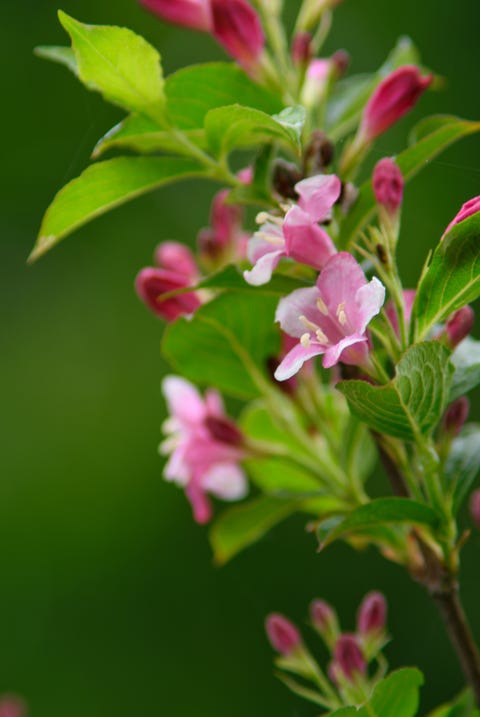
Weigela

korean weigela
CODEWALKER KIM / EYEEMGETTY IMAGES

These pretty pink-and-white trumpeting flowers lend themselves perfectly to the cheerful spring season, which is also convenient since that’s when it’s best to plant them! They bloom most when exposed to plenty of sun, though they can also tolerate partial shade (especially in super-hot climates) and will rebloom in summer and fall. They’d look beautiful in a front garden surrounding an entryway or porch.

Crocus

early spring crocus in snow series group of flowers shallow depth of field

EKSPANSIOGETTY IMAGES

These hardy bulbs often will pop up when snow is still on the ground in wintry climates. Crocuses must be planted in the fall for a spring show—and don’t be surprised if you find them where you didn’t plant them—like under a shrub! They’re tasty to rodents so they often dig them up and bury them elsewhere.

Daffodil

daffodil

JAMES A. GUILLIAMGETTY IMAGES

These classic springtime bulbs, which must be planted in the fall for spring blooms, are one of the first signs that spring finally has arrived! Their cheery yellow flowers are super-reliable. Rodents and deer will leave them alone.

Sweet Alyssum

summertime blossoming white alyssum in bloom

MARIA MOSOLOVAGETTY IMAGES

This dainty annual looks delicate, but it’s tough as nails. It doesn’t mind frost at all. As long as you keep it watered, it will bloom and bloom from spring until the first hard freeze in the fall. Now that’s a great investment!

Get started planning your garden for this year. By clicking the source, you’ll find all 15 flowers to dream about. Happy planting!

Story by Taylor Mead, Arricca Elin Sansone and Mary Elizabeth Andriotis

Source: housebeautiful.com

47 Beautiful Flower Bed Design Ideas for Your Front Yard

Here are 47 ideas for your front yard. Some simple changes, some that will take much planning and preparation.  So, grab your favorite coffee cup and dig into these ideas.

Building a flower garden on your front yard isn’t as hard as you may think! Some fantastic tips for your new Flower Bed Design:  Roses are more difficult to maintain from different flowers like tulips since they grow back year after year. Edible garden will bring extra beauty to your property and lawn. Looking at styles will provide you with some wonderful ideas and can assist you to become quite creative with the form of garden that you want to create. Another idea is to specify a focus for your landscape. Themes are successful only in the event you unify all of the garden aspects carefully.

Most people consider flowers for color. In selecting the forms of flowers you will grow in your garden, spend some time researching the best kinds of flowers for your region. Perhaps you enjoy the concept of just smaller flowers or you wish to decide on ground cover as it’s much less difficult to maintain. In reality, you can construct a lovely topsy-turvy towering flower bed with only a few terra cotta pots and some other supplies.

The accession of herbs to a patio planter adds a fantastic aroma as guests take pleasure in the patio during the summertime. Flowering shrubs and perennials will make extra textures and colors. With good nutrition and maintenance, you are going to have a lovely flower bed that doesn’t ask you to devote hours weeding it. Trees like maple, oak along with green grass lawns are going to be a proper combination.

Here are a number of forms of flower beds you must look at.

Fabulous Plants for Sunny Beds

Maximize impact in full sun with these dazzling varieties:

  • Red salvia
  • Purple coneflower
  • Black-eyed Susan
  • Geraniums
  • Lantana
  • Penstemon
  • Gaillardia (blanket flower)
  • Russian sage
  • Coreopsis
  • Sedum
    •  
    •  

    Gorgeous Shade Plants

    Brighten up dark corners and north-facing beds:

                       Impatiens

        • Begonias
        • Coleus
        • Heuchera
        • Hosta
        • Astilbe
        • Ferns
        • Hellebores
        • Coral bells
        • Ajuga

      Annuals for Nonstop Color

      Replenish beds each spring with these flowering annuals:

        • Marigolds
        • Zinnias
        • Petunias
        • Calibrachoa
        • SunPatiens
        • Cosmos
        • Torenia
        • Nicotiana
        • Geraniums
        • Verbena

      Perfect Perennials for Seasonal Interest

      Reliable perennials thrive for years in flower beds:

        • Daylily
        • Russian sage
        • Baptisia
        • Dianthus
        • Salvia
        • Lavender
        • Yarrow
        • Gaura
        • Veronica
        •  Catmint

      Stylish Substitution Ideas

      If your yard conditions don’t suit a particular plant, substitute with one of these alternatives:

        • Instead of tulips (hungry & short-lived), plant daffodils, crocus, or hyacinths

        • Rather than impatiens (blight-prone) in shade, use begonias, coleus, or caladiums

        • In place of petunias (fussy & disease-prone), substitute calibrachoa or verbena

        • For roses (susceptible to black spot), opt for Knockout roses or shrub roses

        • If hostas (slug bait) struggle, switch to ferns, heuchera, or astilbe

      • Where lavender (winter-tender) fails, sage, catmint, and thyme thrive